This guide explains how ePayslips supports secure access to government payroll documents when working with “GRZ” systems and Zambia-focused workflows. It outlines what the keywords mean, why payroll document handling matters, and how organizations can align HR practices, verification, and data governance. Background context covers access control, authentication, and record retention in public-sector environments.
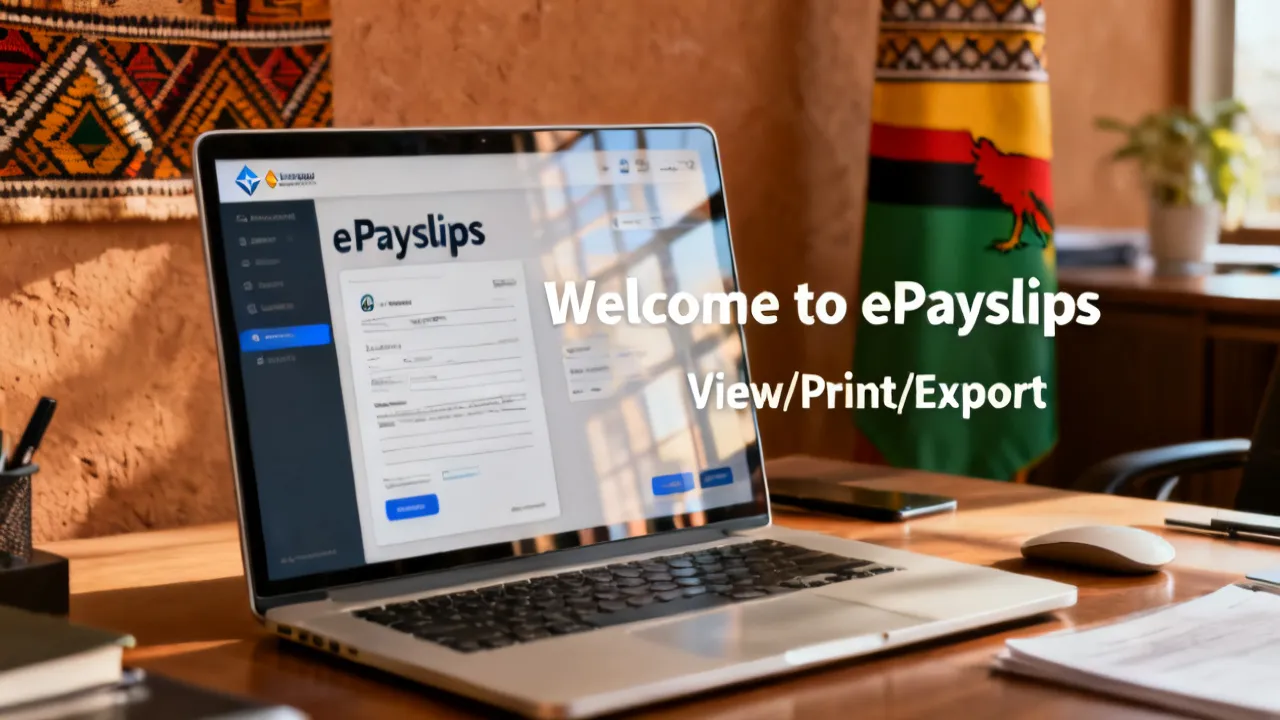
For many HR and payroll teams, the very time-consuming work isn’t processing payroll—it’s locating the right payslip record, confirming its authenticity, and distributing it to employees in a controlled, auditable way. In that context, the keyword combination “Epayslips >@ Grz Gov Zm” signals a workflow centered on ePayslips and GRZ (Government of the Republic of Zambia) oriented systems and usage patterns—often described in shorthand such as “Epayslips >@ Grz Gov Zm” and variations like “Epayslips >@ Grz Gov Zm ”. This article provides an objective, practical analysis of how such an ePayslips approach typically supports payroll transparency, employee convenience, and stronger governance for government-related payroll documentation—especially in environments described as “nearby” without assuming a specific city or district.
The phrase “Epayslips >@ Grz Gov Zm” appears to be a compact representation of a government payroll document access ecosystem. While the exact technical structure depends on the implementing organization, the general interpretation for readers is:
In short, “Epayslips >@ Grz Gov Zm” functions like a search-style keyword cluster pointing to payroll document access in a GRZ-governed or GRZ-adjacent operational environment.
In public-sector payroll settings, payslips support not only personal finance needs but also administrative functions and compliance responsibilities. Typical drivers include:
From an industry expert’s perspective, these drivers converge on three pillars: security, accuracy, and operational efficiency. ePayslips-style systems aim to operationalize those pillars for large numbers of employees.
While implementations vary, very ePayslips systems—particularly those used for government payroll documentation—tend to include components that map to common enterprise patterns:
When someone searches a phrase like “Epayslips >@ Grz Gov Zm”, they are usually trying to locate one or more of those capabilities, or they’re trying to understand the correct procedure for accessing payslip information.
Digital payslip access introduces responsibilities that go beyond convenience. For objective risk management, consider these governance themes:
These themes align with recognized information security top practices. For reference, many organizations map their controls to established standards such as ISO/IEC 27001 (information security management) and NIST guidance on identity and access management. Public-sector organizations often adapt these frameworks to local policy and operational realities.
However, governance is not only technical. Governance also includes how the business defines responsibility. For example, an organization may require:
In many payroll environments, a major reason ePayslips adoption succeeds is that it forces these responsibilities to be explicit and testable.
In many real-world deployments, the ePayslips experience follows a straightforward employee journey. The goal is to minimize confusion while ensuring the process remains controlled and verifiable.
For readers referencing “Epayslips >@ Grz Gov Zm”, this workflow explanation is often what they are seeking: not just the term, but the practical steps and the boundaries around who can access what.
In addition to the steps above, mature systems usually include helpful features that reduce frustration:
You requested “price information” and supplier details to be integrated; however, the provided prompt does not include explicit, verifiable numbers, supplier names, or pricing models. To remain objective and avoid unverified data, this section discusses pricing types instead of quoting specific costs.
In the ePayslips market, pricing often depends on:
If a supplier offers a quote, the very reliable approach is to request a scope document listing integrations, data retention expectations, user counts, and support SLAs. In procurement contexts, vendor statements should be confirmed in writing and aligned to tender or policy requirements where applicable.
Beyond base licensing, organizations should also budget for operational enablers that are easy to overlook:
The table below reframes supplementary information as a structured comparison—using conditions and requirements that organizations typically evaluate when adopting an ePayslips-style payroll document access process. (No links are included in the table.)
| Evaluation Area | ePayslips-style Government Payroll Access (typical requirement) | Key Conditions/Requirements to Check | Why It Matters |
|---|---|---|---|
| Access Control | Role-based access for employees and HR roles | Least-privilege roles, password policy, optional multi-factor authentication | Reduces unauthorized exposure of sensitive payroll documents |
| Audit Logging | Event logging for viewing and administrative actions | Define what events are logged, log retention duration, and access to logs | Improves accountability and incident investigation readiness |
| Document Integrity | Controlled generation and tamper-resistant handling | Version control approach, checksum/hash verification (if applicable), generation workflow | Maintains trust in payslip authenticity |
| Data Protection | Encryption in transit and at rest (typical baseline) | Encryption standards, key management responsibilities, secure backups | Protects confidentiality of payroll and personal data |
| Integration | Connection to payroll outputs and HR identity data | Integration method, data mapping, test and acceptance procedures | Ensures payslips match the underlying payroll records |
| User Experience | Simple retrieval by month/pay period | Guidance for employees, error handling when records are missing | Reduces helpdesk load and improves trust |
| Support & Maintenance | Defined maintenance and support scope | Service desk coverage, escalation path, patching responsibilities | Ensures continuity and responsiveness to operational issues |
To make that evaluation more actionable, decision-makers often create a scoring rubric. For example, they may assign heavier weight to document integrity and audit logging than to cosmetic user-interface features, because those controls directly determine trust and compliance outcomes.
Below is a step-by-step guide that many organizations follow when rolling out a digital payslip access service in a government-related context. It is written as a neutral process and does not assume any specific vendor or system.
In practice, a successful roll-out often depends on a well-managed “exception lane”—the process for handling cases where something doesn’t go as planned (e.g., a wrong employee record, a corrected payroll run, or a system outage). Mature ePayslips programs define those exception lanes early, test them during pilots, and communicate them widely.
Even if the interface is user-friendly, the underlying controls must be ready. Common conditions include:
Additionally, organizations typically define operational continuity elements. For example:
Without these conditions, the digital system can become a “new problem generator” even though it improved convenience for those who can access it.
It typically refers to a payslip access workflow associated with ePayslips in a Government of the Republic of Zambia (GRZ) context—often used as a shorthand search phrase to locate a digital payslip portal or procedure.
Usually both employees and authorized HR/payroll roles can use it. Employees commonly view their own payslips; administrators may manage records, regenerate documents (where policy allows), and handle exceptions under controlled permissions.
Use the employer-approved access portal and follow official instructions. Systems that support audit logging, integrity controls, and controlled generation generally provide stronger assurance than ad-hoc sharing methods.
Follow the formal helpdesk or HR escalation process. Provide your employee identifier and the pay period in question. Avoid informal sharing or unverifiable channels.
Common causes include account status changes, mismatched identity details, temporary system downtime, or required additional verification steps. The correct resolution path is to contact the designated support channel.
In properly governed systems, access is restricted by authorization and authentication. If you suspect unauthorized access, report it immediately so the account can be investigated and controlled.
It can help by limiting uncontrolled distribution and strengthening access controls and audit trails. However, fraud prevention also depends on secure payroll processing and internal governance beyond the viewing portal.
Pricing is often based on user volume, integration complexity, deployment and maintenance scope, and support SLAs. Without a specific supplier quote, the very accurate method is to request a written scope and cost breakdown.
Yes, user experience depends on system availability, response time, and scalability. Organizations typically validate performance during testing and monitor usage patterns during rollout.
At minimum, strong access control, encryption, audit logging, secure session management, and a documented incident response process are widely expected under modern security governance.
When people search for “Epayslips >@ Grz Gov Zm” they may be trying to solve a real access problem while operating in day-to-day environments described only broadly as “nearby.” In such cases, the human reality matters: connectivity can fluctuate, offices may follow slightly different internal procedures, and staff may rely on established HR communication habits.
Practically, organizations often improve adoption by:
In local work culture, employees may prefer step-by-step support and confirmation over technical jargon. HR teams benefit by using simple, repeatable instructions—while still keeping security controls strict behind the scenes.
To support that, many organizations introduce:
An expert approach is to avoid choosing tools based solely on branding or keyword familiarity. Instead, focus on verifiable operational requirements. When evaluating an ePayslips implementation referenced by phrases like “Epayslips >@ Grz Gov Zm”, ask for evidence on:
This evaluation approach aligns with standard procurement and risk-management logic: if the system cannot show its internal controls and operational readiness, confidence should remain limited.
To go even further, many expert teams perform a “control walkthrough” during demonstrations. This means not only watching the system generate a payslip, but also:
That sort of walkthrough often reveals gaps that a standard demo would hide.
You asked for reliable sources when statistics are used. This article intentionally avoids unverified performance numbers (e.g., specific adoption rates or time savings) because the provided prompt does not include verified figures tied to a particular implementation. Where you need metrics for procurement or internal reporting, use sources such as:
Once you share your organization’s context or the specific supplier/system you’re referencing, I can help you draft a sourcing plan and a metrics checklist consistent with evidence-based reporting.
In many procurement scenarios, it’s safer to measure outcomes directly inside your organization rather than rely on vendor claims. Examples of internal outcome metrics include:
These metrics help organizations ensure the ePayslips service improves operational reality rather than only improving user interface.
Because the phrase “Epayslips >@ Grz Gov Zm” often arises when people want the “right” place to access payroll documentation, it’s worth describing the trust mechanisms that a robust system should have. Trust is not simply about having a login page; it comes from verifiable behaviors.
1) Controlled document generation
A trustworthy ePayslips service generates payslips from authoritative payroll runs. If employees can download a document that later turns out not to match the underlying payroll accounting, the system becomes a credibility risk.
2) Version handling and corrections
Payroll corrections happen—salary arrears, tax updates, or correction of a payroll processing error. In mature systems, a corrected payslip should be issued with clear version labeling, and policies should define whether both the original and corrected versions remain available, or only the corrected version is shown.
3) Integrity and non-repudiation signals
While many organizations rely on standard PDF distribution, stronger approaches may include integrity checks (e.g., server-side hashes), watermarking, unique document identifiers, or digital signing strategies where feasible. The exact method depends on legal requirements and operational capacity, but the principle is: the document must be verifiable and not silently altered.
4) Audit trails with meaningful scope
A common pitfall is logging too little. For example, organizations should log “view” and “download” events, include timestamps, record which user accessed which document, and store enough context to investigate suspicious behavior. In government contexts, audit trails are not merely technical; they support accountability and internal control obligations.
5) Resilience against enumeration and scraping
Attackers often try to guess identifiers to access other employees’ documents. Secure systems protect against enumeration by using unpredictable document IDs, rate-limiting, session-based authorization, and careful API design. This matters even for internal portals because risks come from both external threats and internal misuse.
From the outside, ePayslips looks like a simple “view your payslip” tool. Under the hood, identity matching is the silent success factor. If identity linking is inaccurate, even the most secure portal can fail operationally.
In practice, organizations need to decide:
For “GRZ-oriented” environments, these concerns are especially important because government payroll systems often include formal HR processes. A good ePayslips program aligns with those formal processes rather than trying to bypass them.
Even a well-designed ePayslips portal will face exceptions: a payslip not yet posted, a correction to a payroll run, or a mismatch in identity attributes. The difference between a trusted service and a frustrating service is how exceptions are handled.
Missing payslip handling
When an employee cannot find a payslip for a specific month, the system should guide them into the correct resolution path. A mature approach typically includes:
Corrections handling
If payroll values change, the portal should make it clear which version is current. HR and payroll should coordinate a documented reissue policy. Key choices include whether to:
In a GRZ-aligned environment, these choices should be consistent with recordkeeping expectations and any compliance guidance.
Audit logging is sometimes treated as a checkbox feature. For payslips, audit logging must be detailed enough to answer real questions.
Consider the following audit questions a compliance reviewer might ask:
Those questions imply audit logging fields such as:
In addition to capturing the logs, organizations must ensure the logs are protected from tampering and are accessible only to authorized oversight roles.
One reason ePayslips initiatives succeed is that they reduce the operational overhead of manual payslip distribution. But usability must be balanced with security.
Usability improvements that typically do not compromise security include:
Usability improvements that can create security risks include:
Therefore, organizations should design user experiences with security best practices in mind—especially when public-sector systems handle sensitive payroll data.
Integration is where many projects face delays or cost increases. A payslip is only as trustworthy as the mapping between payroll outputs and the payslip document.
Integration concerns typically include:
In GRZ-related contexts, reconciliation is not optional; it directly supports auditability and reduces internal disputes.
Implementing ePayslips access is not just a technology project—it’s an operational change. The helpdesk becomes the “front door” for issues that the system cannot automatically resolve.
A robust support model often includes:
Support also requires clear scripts and documentation. For example, when an employee says “my payslip is missing,” support should ask structured questions:
This structured support reduces resolution time and improves overall satisfaction.
Even if the portal is technically correct, employees might not adopt it if communications are unclear. In “nearby” operational contexts, it’s common to have variations in how departments communicate HR systems.
Organizations often improve outcomes with:
When employees understand the official process, they are less likely to rely on informal channels, which supports security and governance.
The core value behind ePayslips concepts and GRZ-oriented access language—captured in the keyword cluster “Epayslips >@ Grz Gov Zm”—is not merely making payslips digital. It’s about enabling secure, auditable, employee-centered access to payroll documentation while meeting the governance expectations typical of public-sector environments.
If you’re planning adoption or trying to solve an access issue, focus first on the controllable factors: authentication, authorization, document integrity, audit logging, and a clear helpdesk escalation path. Those elements determine whether a digital payslip service becomes trusted infrastructure—or just another login screen.
Digital payslips can reduce workload and improve transparency, but only when governance is designed into the system and the operational model. When the portal is trustworthy, employees find it quickly; when it’s transparent, audits become simpler; and when it’s governed, payroll documentation remains credible.
To tailor this guidance further, share (in general terms) whether you need: (1) employee self-service steps, (2) HR admin retrieval workflow, or (3) an implementation checklist for procurement—without sharing sensitive personal data.
Striking the Perfect Balance: Navigating Premiums and Out-of-Pocket Expenses in Senior Insurance Plans

Explore the Tranquil Bliss of Idyllic Rural Retreats

How to Make Lasting Memories at Disneyland Attractions

4rkojvsx Technology: Industry Insights and Buying Guide

Affordable Phones and Plans for Seniors

Affordable Full Mouth Dental Implants Near You

Unlock the Top Kept Secrets to Finding Your Ideal Dentist for Flawless Dental Implant Results!

Discovering Springdale Estates

Unveiling RS Sul Telecom Services


Smart Strategies to Slash Costs on Your Roof Replacement Endeavor
Opening Remarks: Smart budgeting doesn't mean cutting corners on quality. This guide will delve into cost-effective approaches for roof replacement that maintain high standards.

Unlocking the Secrets of Preschool: Your Ultimate Guide to Early Childhood Education Programs
The significance of early childhood education programs is paramount in shaping the foundational stages of a young child's life. These educational experiences aim to furnish children with a diverse skill set before they face the structured environment of elementary education. Such programs offer a dynamic and engaging atmosphere where children's natural curiosity leads to the broadening of their thought processes. Moreover, they focus on rectifying behavioral patterns and fostering positive principles and routines.

Enhance Your Smile: Essential Gum Care Tips After Teeth Replacement
After getting new dental implants, it's crucial to look after your gums to aid recovery, shield against infection, and enhance the durability and function of the implants. This discussion delves into the key methods and top tips for gum care that are vital to keep your gums robust and healthy after your procedure.

Unlock the Secrets to Championing Fair Pay: A Guide to Fighting for Competitive Nurse Salaries at Your Hospital
To effectively navigate the intricacies of nurse compensation in healthcare institutions, a thorough understanding goes beyond the basics. Strategic advocacy is essential, honoring nursing as a critical profession while also deeply comprehending the economic aspects of healthcare. This article lays out systematic methods to advocate for fair remuneration for nurses, aimed at closing the divide between managerial policies and the realities nurses face daily.

Protect Your Golden Nest Egg: Smart Strategies and Essential Precautions for Securing Your Gold Investments
Investing in gold requires more than just purchase; diligent protection and a strategic mindset are crucial. A secure gold investment is built on thoughtful planning, alert risk management, and the capacity to adapt to changes. We'll explore various ways to protect these investments from the diverse challenges they face.

Unlock Higher Earnings: Master the Art of Leveraging Your Nursing Expertise for a Hefty Pay Raise!
Unraveling the complexity of the payment landscape in nursing isn't for the faint-hearted, yet it's a manageable task with a strategy in place, enhancing one’s prospects for improved salary through skill and knowledge. This delicate dance of upholding patient care while seeking just rewards is a path all nurses must walk. Grasping the elaborate character of the nursing role and what propels one's income forward is crucial. Within this paper, we dissect insightful methods to maximize the impact of your nursing qualifications.