This guide explains Cloudpay IE in an objective, decision-ready way, covering typical pricing considerations, supplier and onboarding factors, and practical requirements for evaluation. Cloudpay IE is a payroll and payments-related platform often used by employers and finance teams to streamline card, expense, and payout workflows. The background section clarifies what “IE” typically indicates and why supplier fit matters for compliance and operational continuity.
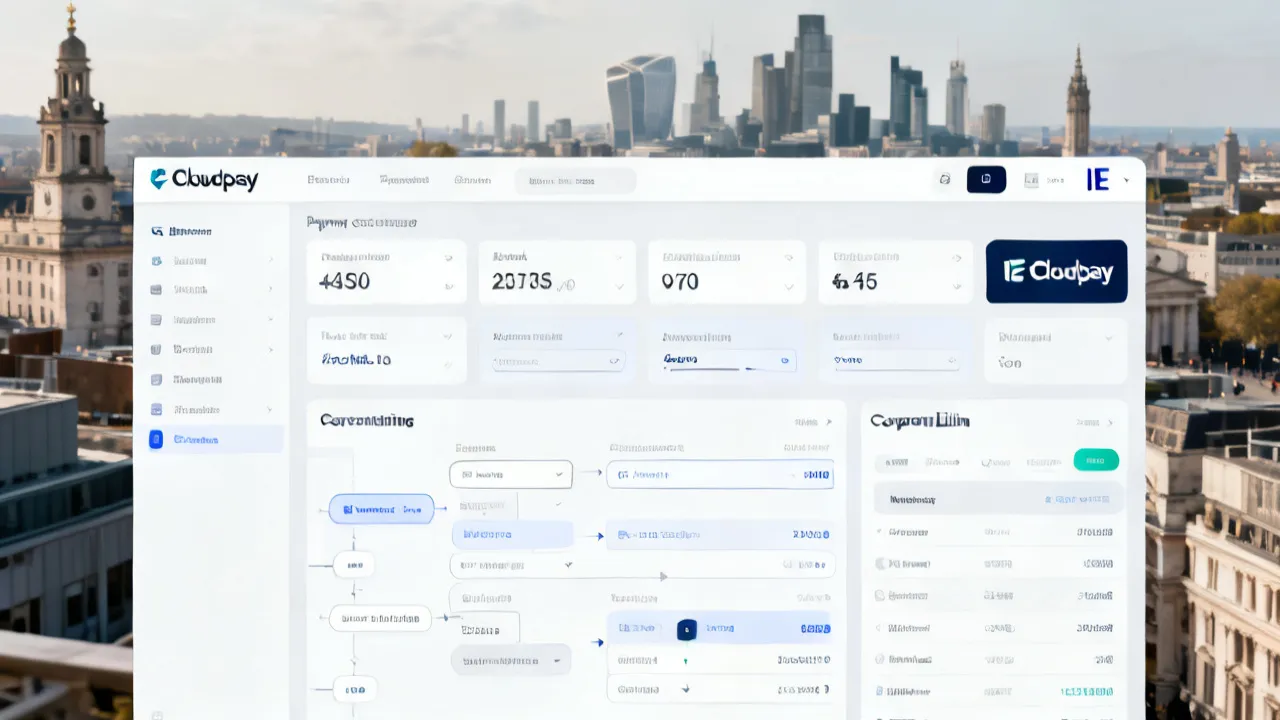
When organizations assess Cloudpay IE, the most important step is to compare total operational impact—not just headline price. In practice, “price” is shaped by implementation scope, payment or payout volume, the service models included, the supplier’s ability to support your jurisdiction-specific requirements, and the degree to which your organization must do work up front (or can rely on the vendor’s operational playbooks). For finance, procurement, and internal control stakeholders, the strongest decisions happen when payment workflows, reconciliation expectations, audit evidence, and governance controls are aligned to your organization’s operating model—not just when you select a lowest-cost quote.
Because Cloudpay IE is commonly discussed in the context of Ireland (“IE”), buyers tend to focus on (1) how payouts and payment rails integrate with existing systems and bank processes, (2) the reliability and support model provided by the supplier, and (3) the documentation and compliance posture required for internal audit and external reporting. Even when two suppliers appear to quote similar fee structures, their onboarding steps, assumptions, and conditions can differ substantially—often affecting implementation time, audit trail completeness, operational burden, and ongoing cost.
To evaluate effectively, you should treat “Cloudpay IE” not as a simple product comparison, but as a full operational change: people, processes, systems, controls, and evidence. A defensible evaluation process therefore includes commercial analysis, operational due diligence, security and access review, integration and testing, and a clear definition of who owns which control activities during both onboarding and steady-state operations.
In supplier conversations, Cloudpay IE generally indicates the service offering connected to the Irish market (often abbreviated as “IE”). For buyers outside Ireland, the key point is that local regulatory expectations, reporting conventions, and bank/payment operational realities can differ from other regions. Therefore, your due diligence should treat “IE” as a marker for localized service operations and contractual responsibilities, not just as a marketing label.
From an industry perspective, payment and payroll-adjacent platforms are typically evaluated on a spectrum of capability: payment initiation and scheduling, settlement timing expectations, identity and access management, data retention for audits, support maturity, and the supplier’s ability to provide consistent outputs when exceptions occur. Buyers who succeed with these platforms usually do so by requiring evidence—not only assurances—before deciding. Evidence can include process documentation, control narratives, incident response playbooks, and examples of reconciliation exports and audit logs.
Why does this matter? Because payment workflows are rarely “set and forget.” They involve repeated cycles (often monthly) of preparation, authorization, execution, reconciliation, and remediation. When localization is mishandled—whether because an operational assumption is wrong, a reporting output doesn’t match your finance practices, or support SLAs don’t align with your operating hours—your organization can experience avoidable risk and cost. That risk tends to show up at predictable times: month-end close, holiday bank operational changes, and periods when HR or payroll data cycles run ahead of payment schedules.
Thus, a strong evaluation begins with understanding not only what Cloudpay IE does, but how it behaves in real operational conditions: partial data, corrected records, late approvals, rejected payment instructions, and system incidents.
Many buyers begin with cost, but procurement leaders often discover that the “price” they receive is only meaningful when you understand what it includes (and what it does not). With Cloudpay IE, pricing is commonly influenced by several categories of factors.
Instead of simply comparing a single number from each supplier, you should request a commercial proposal that decomposes the quote into components you can model: one-time implementation charges, recurring service fees, and variable fees based on usage or volume. In addition, you should assess how each supplier’s onboarding process and assumptions affect your near-term and long-term total cost of ownership.
Common pricing drivers to clarify with each supplier
Important: Because specific pricing varies by contract and scope, you should request a written commercial proposal that clearly itemizes charges and conditions. Ask suppliers to list assumptions explicitly—for example, the number of testing cycles included, the amount of integration support required, and which data formats you provide versus which the supplier transforms.
For verified context, review relevant Irish financial and employment guidance from official sources such as the Central Bank of Ireland and Citizens Information when your use case touches payment and employment obligations. These sources can help you evaluate whether a supplier’s approach aligns with expected governance, reporting expectations, and operational responsibility. (Even when your organization is not directly regulated in the same way as the supplier, your internal governance expectations should still be aligned to the guidance landscape.)
In procurement and finance operations, supplier selection is often a risk-management decision. When evaluating Cloudpay IE, consider whether the supplier’s operational model supports your internal controls, change-management needs, and audit readiness requirements.
A strong supplier fit evaluation typically focuses on at least five dimensions: onboarding maturity, security and access controls, reconciliation support and reporting artifacts, operational continuity (incident response and availability), and documentation quality.
Key supplier-fit checks
Even if the quoted cost is attractive, organizations can experience hidden friction when documentation is incomplete, integration outputs don’t match accounting formats, or support workflows don’t align with their finance calendar. Therefore, your evaluation should include a structured trial or discovery phase wherever possible.
A practical “evidence-based” approach includes requesting sample reporting outputs (with realistic data), a reconciliation workflow walk-through, and integration tests using sample datasets. If a supplier cannot demonstrate how exceptions and corrected records appear in logs and reports, it is a signal to investigate further. Payments systems are defined not by happy-path scenarios but by what happens when something deviates from plan.
Although implementations vary, one of the primary reasons teams explore Cloudpay IE is to reduce manual effort and improve consistency across payment-related operations. In many organizations, the workflow includes requirements gathering, configuration, and then a live operating cycle with repeating tasks.
The live operating cycle often includes:
If your organization is used to spreadsheets, manual bank transfers, or legacy reconciliation processes, the transition can be a change-management challenge. You should plan for training, updated SOPs, and a validation period in which finance teams compare outputs against known baselines before fully relying on the new artifacts for audit and close.
Successful change management usually also includes clear communication around “who does what” after go-live. For example, you should clarify whether your team owns payee data updates, whether the supplier provides data validation rules, who triggers re-runs for rejected instructions, and who produces the final reconciliation package for your external accountant or internal audit.
For objective assessment, it helps to understand what “good” looks like in the broader payments and financial operations ecosystem. Rather than relying on marketing claims, buyers typically examine evidence such as control descriptions, support documentation, audit-friendly logs, and operational transparency.
Evidence that tends to correlate with reliability and audit readiness
For regulators and supervisory expectations, organizations can consult frameworks and guidance published by authoritative entities. For Ireland, relevant information often appears through the Central Bank of Ireland and other government or statutory bodies. When your use case intersects with employment-related matters, Citizens Information can provide context about obligations and employee rights—useful for ensuring your process design doesn’t inadvertently create compliance misunderstandings.
Even though you may not directly regulate the same entities as the supplier, demonstrating alignment with established expectations reduces the chance of internal control gaps. This can also improve the quality of discussions with internal audit by making the evaluation questions grounded in known governance themes: accountability, traceability, documentation, and risk management.
| Evaluation area | What to check with the supplier | Why it affects outcome |
|---|---|---|
| Pricing structure | Fee components, volume assumptions, implementation charges, and any recurring costs by service tier | Prevents budget surprises and helps you compute total cost of ownership |
| Integration readiness | API availability, data export formats, mapping effort, and exception handling for incomplete or corrected records | Reduces operational friction and shortens implementation timelines |
| Controls and approvals | Role-based access, approval workflows, segregation of duties, and audit log completeness | Supports internal audit requirements and reduces payment governance risk |
| Reporting and reconciliation | Statement formats, reconciliation guidance, and timeliness of financial artifacts | Improves month-end/period-close efficiency and accuracy |
| Support and incident handling | Support coverage model, escalation paths, and incident communication process | Minimizes downtime impact and improves operational confidence |
| Documentation for audit | Availability of policies, process documentation, and evidence of control operation | Lower audit preparation effort and stronger compliance posture |
Below is a practical, procurement-friendly sequence many finance leaders follow when evaluating platforms similar to Cloudpay IE. Use it as a checklist for consistent comparisons across suppliers. The key is to execute each step with outputs you can reuse: a requirements pack, test results, control evidence assessments, and a decision rationale aligned to your risk appetite.
While exact terms vary by supplier contract and organizational context, onboarding typically requires readiness in the following areas when deploying a payment-adjacent platform such as Cloudpay IE:
For organizations familiar with Irish operational rhythms—where finance teams often align activities around local reporting calendars—planning around internal sign-offs, HR data cycles, and close processes can reduce late surprises. For example, if your HR system updates employee data on specific cut-off days, align configuration and data validation to those windows so you’re not forced to do emergency corrections immediately before payment runs.
In Ireland, procurement and finance teams frequently emphasize documentation and internal governance—often reflecting a broader preference for clear audit trails and well-articulated responsibilities. When teams discuss Cloudpay IE, they may also consider how operational processes fit with local organizational structures and reporting expectations.
If you are working with cross-functional stakeholders, it can help to use familiar local business language during discovery. For example, rather than describing only “integration,” frame it as “how month-end reconciliation will be produced and evidenced.” This tends to resonate more with finance audiences, and it clarifies what “success” looks like: not just system connectivity, but consistent financial artifacts, traceability, and predictable exceptions handling.
There are also practical localization aspects that organizations sometimes underestimate:
When localization is handled well, stakeholders across finance, procurement, and audit can quickly align on a shared understanding of responsibilities and evidence. When it is handled poorly, evaluations become ambiguous and teams rely on informal explanations—something audit teams typically dislike.
When an organization wants to reduce operational risk, the top predictor is the quality of proof provided by the supplier during evaluation. For Cloudpay IE-type deployments, look for documentation that answers the “how do you know?” question—how do they know a control works, and how do you prove it to others?
Specific documentation and proof points to request
These elements do not guarantee perfect performance, but they strongly improve your ability to validate readiness and reduce dependency on informal explanations. A supplier that provides clear documentation also tends to have more mature operational processes, which often correlates with reliability.
During evaluation, you can improve your signal-to-noise ratio by asking for “proof artifacts” instead of general descriptions. For example: “Please show the reconciliation export for a payment run with one corrected record and one rejected record,” or “Please show the audit log lines for an approval override.” These questions reveal whether the supplier’s system behavior is predictable and whether they understand audit expectations.
Security reviews can become vague if they remain at a high level. For Cloudpay IE evaluation, you should convert security requirements into practical questions tied to finance governance. Payments systems are a high-impact target; therefore, access control, identity lifecycle, audit logging, and segregation of duties must be tested conceptually and, where possible, operationally.
Make security evaluation actionable
Beyond controls, consider how your organization will maintain them. For example, if the supplier provides administrator tooling, determine who in your organization becomes responsible for access provisioning and how those responsibilities will be documented. A common failure mode in payment-adjacent systems is not the lack of features, but unclear ownership after go-live.
Therefore, build ownership mapping into your evaluation deliverables: a RACI (Responsible, Accountable, Consulted, Informed) matrix that ties each control step to a specific party and includes evidence artifacts. This matrix becomes valuable later when internal audit assesses whether controls are actually operated effectively.
For finance teams, Cloudpay IE evaluation often comes down to reconciliation and reporting reliability. Even when payments are executed correctly, reconciliation failures can cause delays in month-end close, disputes with accountants, and increased manual effort.
What to test and validate during evaluation
Practical reconciliation scenarios to include in a proof exercise
To reduce surprises, request at least three scenario demonstrations:
When you perform these scenario tests, capture evidence: screenshots, exported files, and notes on how reconciliation totals tie out to expected values. These artifacts become part of your internal evaluation record and later support audit discussions.
Reliability is not just about uptime percentages; it is about how a supplier behaves when things go wrong. For Cloudpay IE, you should evaluate support and incident handling in a way that reflects how your finance and payment operations actually run.
Questions to ask during support evaluation
Align SLAs with your finance calendar
A common mistake is evaluating support SLAs in isolation. For month-end and near-cut-off payment cycles, your effective “need window” can be larger than you initially expect. For example, even if support hours are limited, you may still require operational guidance during the hours where finance stakeholders are handling approvals and reconciliation checks. Therefore, align the platform’s support coverage with your internal operating hours, and document the differences.
If a supplier’s SLAs do not cover your critical hours, ask what “workarounds” exist and whether they can provide additional support tier options. You should treat the absence of adequate support coverage as a risk factor that can influence your decision—even if pricing is attractive.
Once you go live with Cloudpay IE, changes will occur: bug fixes, feature enhancements, integration adjustments, and sometimes policy updates. The risk is not that changes happen—it’s that changes happen without appropriate governance, communication, and evidence for internal audit.
What to request regarding change management
Practical governance alignment
To make change management concrete, align release governance with your internal controls calendar. For example:
Suppliers with mature change-management processes can reduce the likelihood of control surprises and minimize operational disruptions. These suppliers tend to maintain documentation and a predictable cadence for releases.
In many evaluations, timeline is discussed at a high level, and then delays appear due to integration complexity, data readiness, testing cycles, or approval workflow definition. A strong evaluation should therefore assess whether a supplier’s go-live plan is realistic given your organizational readiness.
Implementation elements that often determine timeline accuracy
Ask for a detailed implementation schedule
Rather than accepting a generic “X weeks to go-live,” request a plan broken down into phases with deliverables and owners. For example:
When suppliers include owners and deliverables, you can assess feasibility. When the plan lacks clarity, you should treat timeline risk as a factor in your evaluation and perhaps request adjustments.
A payment platform evaluation often fails when governance roles are unclear. It is not enough for a supplier to have internal controls; your organization must also operate controls in its own environment. For Cloudpay IE, governance should be described clearly during onboarding and then maintained in steady-state operations.
How to define ownership and evidence
Use a RACI model
Most organizations benefit from using a RACI matrix for controls. For example, for approvals you might decide:
For reconciliation artifacts, responsibilities might differ: your finance team might perform reconciliation steps, while the supplier provides exports and supporting documentation.
When governance ownership is explicit, internal audit discussions become simpler and less adversarial. When it is not explicit, audit findings can result not from system failure but from unclear operational responsibility.
Commercial proposals and contracts determine how operational responsibilities are handled when things go wrong and how data and documentation are provided throughout the lifecycle. During Cloudpay IE evaluation, you should review contractual clauses with a risk lens.
Contract areas that commonly matter
Operational impact of contract gaps
Contract gaps often surface during operational stress. For example, if you cannot export audit logs in a usable format at contract end, your organization might face audit readiness issues or migration costs. If SLA commitments do not cover your critical hours, you might have limited remedies. Therefore, align the contract review with your evaluation outputs: what you tested and what evidence you need.
To make your evaluation defensible, produce internal artifacts that document decisions and results. You can maintain consistency across suppliers and also provide a clear rationale to internal audit and procurement stakeholders. These artifacts also make the implementation phase smoother by clarifying assumptions early.
Recommended internal documents
These outputs prevent the evaluation from becoming a subjective process. They also improve continuity between procurement, finance operations, IT/security, and internal audit.
“Cloudpay IE” typically refers to a Cloudpay service offering associated with Ireland (commonly abbreviated as “IE”). In due diligence, treat “IE” as an indicator of localized operational setup and contractual/regulatory context relevant to Ireland.
Ask for a written proposal with itemized fees, implementation/setup costs, assumptions, and volume drivers. Compare total cost of ownership, including onboarding effort, reporting/reconciliation support, and any recurring service tier differences—not only the initial quote. Also compare what is included in testing, training, and audit documentation support.
Request documentation for onboarding steps, security and access controls, escalation processes, sample reporting outputs, integration data formats, and a change-management approach. The supplier should clarify responsibilities split between your team and theirs, and provide evidence artifacts you can validate during discovery or a pilot.
Common risks include data quality issues (e.g., incorrect payee/payment details), misalignment of approvals workflows, insufficient reconciliation support, inadequate audit evidence, and unclear incident handling. These risks can be mitigated through structured testing, documentation review, governance mapping (RACI), and contractual clarity on responsibilities and evidence delivery.
Often yes, at least in a discovery sense. Even if you do not build full integrations immediately, you should validate how your data will be imported/exported, how exceptions are handled, and whether reporting outputs can support your accounting close. Where integration is not ready, request mock runs using sample data formats that match your expected production state.
Typically, go-live readiness includes validated datasets, confirmed approval workflow configuration, successful reconciliation testing, security access provisioning, training sign-off for administrators and approvers, and sign-off on reporting artifacts. The exact conditions depend on contract scope and supplier methodology, so agree on acceptance criteria upfront.
For general regulatory context, consult official sources such as the Central Bank of Ireland and Irish public guidance portals like Citizens Information. Use these to frame your evaluation questions and confirm whether supplier commitments align with expected governance and accountability themes relevant to your operational design.
During the proof exercise, request scenario testing for rejected payments, corrected records, and approval delays. Ask the supplier to provide representative examples of audit logs and reconciliation exports for these scenarios so you can validate both operational behavior and evidence completeness.
Internal audit typically focuses on segregation of duties, audit log completeness, evidence availability, change-management governance, and the clarity of operational responsibilities (what your team does vs. what the supplier does). They may also want to verify that reconciliation outputs are consistent and explainable for review purposes.
A pilot run or parallel run is an approach where a limited set of payments is processed using the new platform while your team continues to run existing processes for comparison. It helps validate outputs, reconciliation totals, and operational workflow fit. Whether it’s required depends on risk appetite, complexity, and how critical the affected payments are.
Choosing Cloudpay IE is best approached as a structured evaluation of operational fit. Focus on the complete commercial picture, validate integration and reconciliation workflows, and verify control evidence that supports internal audit readiness. When pricing, supplier capability, onboarding conditions, support commitments, and governance responsibilities are reviewed together, decision-makers can move from “cost comparison” to a defensible procurement outcome that supports steady, governed operations in Ireland.
Ultimately, the goal is not simply to “select a platform,” but to ensure that your organization can run payment-related operations reliably with clear ownership, predictable reconciliation artifacts, and documented evidence. When you evaluate Cloudpay IE with that mindset—using proof artifacts, operational testing scenarios, and governance mapping—you reduce risk, shorten internal alignment cycles, and increase the likelihood that go-live delivers measurable benefits rather than ongoing friction.
Striking the Perfect Balance: Navigating Premiums and Out-of-Pocket Expenses in Senior Insurance Plans

Explore the Tranquil Bliss of Idyllic Rural Retreats

How to Make Lasting Memories at Disneyland Attractions

4rkojvsx Technology: Industry Insights and Buying Guide

Affordable Phones and Plans for Seniors

Affordable Full Mouth Dental Implants Near You

Unlock the Top Kept Secrets to Finding Your Ideal Dentist for Flawless Dental Implant Results!

Discovering Springdale Estates

Unveiling RS Sul Telecom Services

Unveiling RS Sul Telecom Services
RS Sul Telecom emerges as a prominent entity in the telecommunications industry, providing reliable services across various regions. This article delves into the offerings of RS Sul Telecom, the benefits it presents to both individual and business clients, and its impact on the modern telecom landscape.

Understanding Rlock Advpl in Business
Rlock Advpl represents a pivotal advancement in business software solutions, offering enhanced security and efficiency for enterprise resource planning systems. This article delves into the intricacies of Rlock Advpl, its application in modern businesses, and the benefits it offers in streamlining operations and safeguarding data. As an expert tool, Rlock Advpl is essential for businesses looking to optimize their IT infrastructure.

Unveiling Atranet Innovation
Atranet represents a cutting-edge concept in networking technology. Harnessing its capabilities can transform digital communication by providing seamless connectivity. Designed to optimize data transfer, security, and efficiency, Atranet is shaping the future of how we connect and share information. This article delves into its structure, applications, and potential impacts on industry practices and consumer experiences.

Understanding Polysulfide Adhesive Applications
This comprehensive guide explores the applications and benefits of polysulfide adhesive, highlighting its unique properties and widespread use in construction, aerospace, and automotive industries. Known for its flexibility and resistance to various environmental factors, polysulfide adhesive is a key component in sealing and bonding applications, providing durability and reliability in demanding conditions.
Comparing Vtex with Salesforce Commerce
This article provides an in-depth comparison between Vtex and Salesforce Commerce, two leading digital commerce platforms. Each offers unique features suited to different business needs. Vtex is renowned for its collaborative commerce approach, while Salesforce Commerce shines with its comprehensive customer relationship management capabilities. Explore their differences, strengths, and insights from industry experts.

Understanding the Latest Chrome Version
This article delves into the intricacies and features of the latest Chrome version. Chrome, developed by Google, is one of the very popular web browsers globally, known for its speed, simplicity, and security features. Each update aims to enhance user experience through improved functionality and performance. Understanding these updates is crucial for both everyday users and developers.