This guide explains how Epayslips, Grz, Gov, and Zm work together for secure payroll record access and how “nearby” location considerations can affect usability. It provides objective background on common e‑payslip workflows, typical authentication practices, and data stewardship in government-adjacent payroll environments, helping readers evaluate requirements and next steps responsibly.
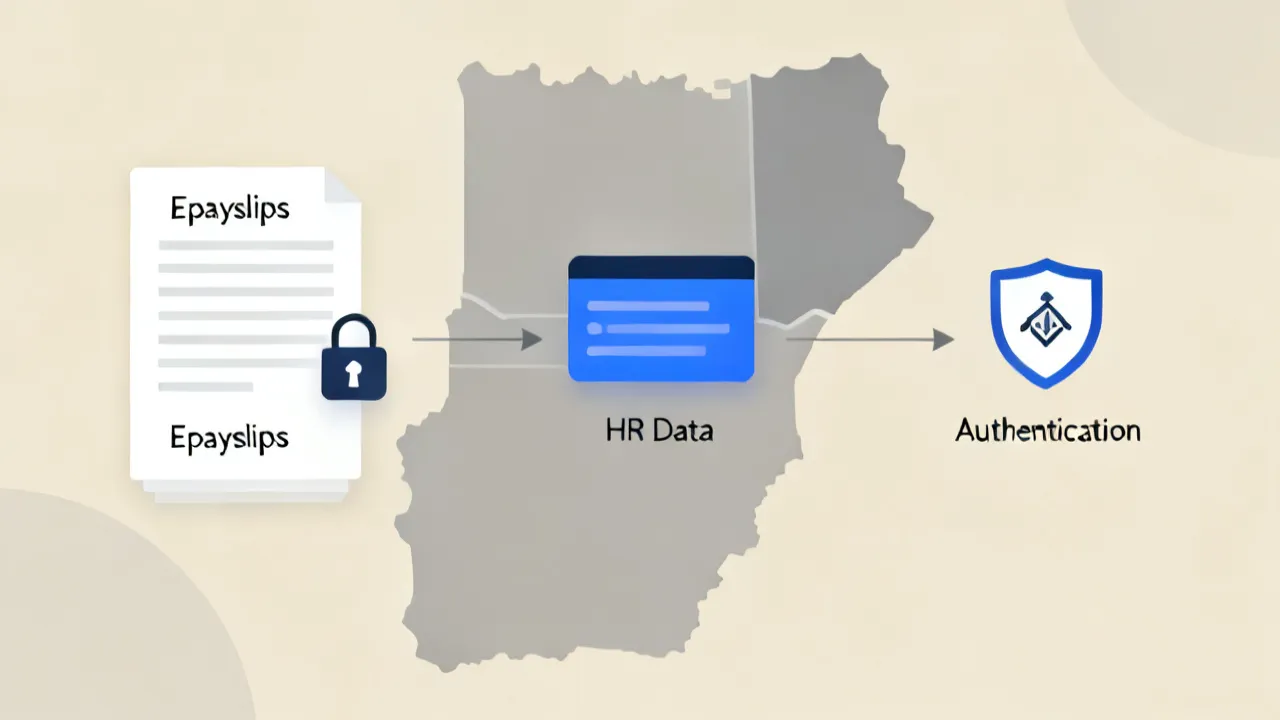
Epayslips systems—often referenced alongside Grz, Gov, and Zm—are typically designed to help employees view, verify, and manage payroll documents digitally. In a “nearby” context, users should expect variations in access reliability, document availability timing, and local authentication pathways. For the very accurate experience, confirm the official channel for your employer’s payroll records and follow the stated identity and consent requirements before attempting login or document download.
At a high level, e‑payslips are meant to be the secure, searchable, time-stamped version of a payroll statement. But “secure” and “accurate” depend on where you log in, how your identity is verified, which pay period you choose, and whether the document you download is the latest official version produced by the payroll system of record. Those practical details—rather than the general idea of “an e‑payslip portal exists”—are what determine whether the process works smoothly for you.
In many public- and employer-run payroll environments, the term Epayslips is used as shorthand for a digital payslip or electronic payroll statement. The practical value is straightforward: replacing paper distribution with a secure, searchable, and time-stamped record.
From an industry perspective, the design goal is not merely convenience. It is also about auditability (clear issue dates and versions), data integrity (preventing accidental edits), and controlled access (ensuring the right person sees the right document).
Because payroll statements often serve as evidence—when applying for loans, submitting proof of income, reconciling taxes, verifying employment income history, or resolving disputes—people need more than a “PDF that looks right.” They need a document that ties back to the payroll run for a specific pay period, that reflects the correct totals and deductions, and that is recognized by whoever is performing the verification.
In many organizations, the e‑payslip portal is also part of a broader HR digital environment. That can include identity proofing steps, consent to electronic delivery, and record retention policies. Understanding those surrounding requirements makes it easier to troubleshoot issues, because many errors are really “workflow” issues: your payroll record is present but not yet published, or your identity attributes don’t match what HR uploaded, or your login session is failing due to a security policy.
References to Grz and Gov commonly signal that the payroll or HR process is administered through a government or government-adjacent framework. In such setups, e‑payslip features usually depend on:
Because administrative systems can differ across institutions, “Grz/Gov”-tagged experiences may vary in the exact button labels, document naming formats, or the timing when new payslips appear.
For example, some government-adjacent payroll systems release payslips after a scheduled payroll “closure” and then after a final validation stage. Others may support revised payslips if corrections are made. When revisions happen, the portal may show multiple versions with different timestamps, and the user typically needs to ensure they download the most recent version for any official verification.
Additionally, in government-adjacent settings, you might see policies such as:
These patterns aren’t “guarantees” because every portal is configured differently, but they are common enough that users who understand them tend to experience fewer frustration cycles. Instead of repeatedly refreshing or trying unofficial “mirrors,” they wait for the publication window, confirm the pay period filter, and then contact support with useful details.
When users mention Zm in payroll discussions, they usually mean a country or region-specific context. Since your request indicates that any location term in keywords should be replaced with “nearby”, consider the implications this has for everyday use:
In practical terms, “nearby” often means that the same portal vendor or same HR framework is used, but local implementation details can differ. That can include the language shown in menus, the bank- or tax-reporting label conventions on the payslip, and the way “account recovery” is configured for users.
It can also mean that your connection may be routed differently. Some portals enforce strict security checks that fail if the connection is unstable, a VPN is detected, or the user’s device clocks are out of sync. You might interpret this as “the portal is broken,” but more often it is “the security check didn’t validate.” In those situations, the most productive path is not repeated login attempts but rather stabilizing the connection, ensuring correct system time on your device, and using the official support channels.
Payroll documents contain sensitive personal and financial information. In professional deployments, teams typically apply multiple layers of protection. For readers evaluating how Epayslips/Grz/Gov workflows operate, it helps to recognize the common operational patterns that reduce risk:
Even when the user interface feels simple, the back-end logic is often complex: payroll calculations may be performed earlier, while the e‑payslip distribution happens later during controlled publication windows.
That complexity is why the “user experience” can sometimes look inconsistent. One user might see the payslip immediately after payroll processing, while another sees a slight delay because of account mapping synchronization or an identity verification step that completes later. In addition, some systems implement staged rollouts—for example, first releasing payslips for employees in one payroll group or organizational unit and then releasing others shortly afterward.
From a stewardship standpoint, organizations also have a responsibility to ensure that the portal doesn’t become a data leak. Common design measures include:
When you keep these security goals in mind, troubleshooting becomes more logical. Instead of blaming the interface alone, you consider: “Is the system waiting for publication approval?” “Is my account mapped to the correct payroll record?” “Is there a session integrity failure caused by network instability?”
Whether you are using an Epayslips-style portal or an employee self-service page under a Grz/Gov umbrella, you should verify key attributes of the document you retrieve:
This is especially important for administrative processes such as loan applications, proof-of-income submissions, or employment verifications.
It’s worth noting that “correct-looking” doesn’t always mean “correct for verification.” Some verification processes depend on strict field alignment. For example:
Also, if your portal provides multiple document types (for example, payslips, tax summaries, or annual statements), make sure you retrieve the correct document category. Many portals separate “payslip by pay period” from “summary by tax year.” Confusing these can lead to rejection of documents even if the amounts are correct.
Finally, consider the scenario where payroll is corrected after an initial run (for example, retroactive adjustments). A responsible approach is to:
| Aspect | What to expect in an Epayslips-style workflow | Typical requirements/conditions |
|---|---|---|
| Entry point | An employee self-service portal for payroll statements | Use the employer’s official channel; avoid unofficial mirrors |
| Identity matching | Your account is linked to payroll records | Accurate personal details as maintained by your HR/payroll unit |
| Authentication | Credential-based login and possibly additional verification | Active email/phone where applicable; secure password practices |
| Document access | Payslips displayed per pay period; downloads in PDF or similar | Internet access; compatible device settings (PDF viewer) |
| Publication timing | New payslips appear after payroll processing and approvals | Expect delays aligned with payroll calendars and sign-off |
| Privacy controls | Access limited to the employee and authorized roles | Do not share credentials; treat documents as confidential |
To supplement that table with more real-world nuance, consider the following “hidden” requirements that are common across many systems. They aren’t always listed explicitly for end users:
For the security and data-handling principles mentioned above, readers can consult widely used frameworks and guidance from reputable organizations, such as:
When users understand the principles behind these standards—authentication assurance, confidentiality, integrity, and audit logging—they’re less likely to interpret normal security behavior as “portal failure.” For instance, a re-login after inactivity is often intentional. Likewise, identity verification steps are part of ensuring that the right person receives the correct payroll documents.
Also, many organizations align their own internal policies with those principles. Even if the portal doesn’t mention NIST or OECD explicitly, the underlying security design commonly reflects similar goals: reduce unauthorized access, prevent tampering, and maintain traceability.
To make this process even more reliable, it can help to follow a “verification-first” habit. Instead of immediately downloading and sending to a third party, you first:
This approach reduces the chance you submit an outdated or wrong document. If you notice a mismatch, you can request a correction before the document becomes part of an application record.
In addition to those common conditions, users sometimes overlook document permission constraints that can vary by device and network:
Because “nearby” contexts can mean you’re on varied networks or traveling between areas, it’s helpful to treat network stability as part of the workflow. If you try to download on a congested connection and your session expires mid-download, you may get a corrupted file or a half-loaded document view. In those cases, the correct response is usually to re-establish a stable connection, then try again—rather than immediately escalating to HR.
Below are practical issues users often encounter with Epayslips/Grz/Gov-like systems in “nearby” contexts, along with safe, professional resolutions.
Sometimes “not showing” is simply a filter mismatch. A pay cycle might run mid-month to mid-next-month, while your “calendar month” expectation differs. Many portals label cycles with internal code-like names or show date ranges. If you see a list but it doesn’t include the period you expect, look for:
Account mismatch often has a few root causes. For example:
If the portal tells you “record not found” or “identity mismatch,” don’t treat that as a general network error. That message is usually an indicator that the portal can’t link you to the payroll record. The best next step is to contact payroll/HR support with the relevant identifiers so they can correct the mapping.
A file that downloads but won’t open is often a symptom of partial downloads, a blocked file type, or a corrupted local cache. In “nearby” contexts, where connectivity can be less stable, the partial download scenario is common. To reduce risk:
If you suspect a portal-side issue (for example, many employees reporting “downloaded file cannot open”), notify payroll/HR rather than trying to solve it solely on your device.
Sometimes the portal displays “processing” while it fetches data from multiple back-end services. If your connection is unstable, that data retrieval can fail, leaving a blank list. In those cases, switching from mobile data to Wi‑Fi (or vice versa) can resolve the issue quickly if the platform is sensitive to network conditions.
It’s important not to assume the portal is wrong immediately. Payroll documents can show components that aren’t obvious at a glance. For example, a “net pay” change might be due to a deduction that applies annually (insurance adjustment, tax reconciliation, or a benefits true-up). If you truly see an unexpected omission or a large discrepancy, you should escalate to HR/payroll support. Provide both the downloaded payslip and your questions framed around pay period, line items, and dates.
Phishing risk is a real concern in payroll-related communications. If an email appears suspicious—unexpected branding, odd sender addresses, requests for credentials, or links that don’t match the organization’s official domain—do not use it. Instead, navigate to the portal through official channels (such as the HR intranet, payroll email signature links, or the official website). That safe practice prevents credential compromise.
When people ask whether an Epayslips record is “valid,” the responsible answer is tied to how the employer or payroll authority issues it. In professional e‑payslip systems, validity generally depends on whether the document:
If a third party (bank, landlord, administrative office) requests payslip verification, they typically care about the pay period alignment, the employee identity fields, and whether the document appears authentic and complete according to their internal requirements.
In practice, “valid” can mean multiple things:
If you’re unsure whether a specific payslip will be accepted, the safest approach is to confirm the requirements with the receiving party. Often they’ll specify the minimum content required (employee name, employee ID, pay period, gross and net pay). If those fields exist on your portal-issued payslip, it is generally a good sign.
Another important aspect is document versioning. Some portals provide “revised payslips.” If you submit the first version instead of the revised one, the receiving party may reject it because the net pay or deductions don’t match their expectations. Always check for indicators such as:
To keep the discussion grounded, consider a few typical “nearby” scenarios employees face:
In each case, the portal’s reliability and the correctness of the pay period selection are more important than the visual design.
Let’s explore these scenarios in more detail to show where issues typically arise and how users can avoid them.
Scenario A: Applying for a loan or credit product
When a bank requests proof of income, it often expects a set of payslips covering a certain number of months. The employee needs to ensure:
If the portal delays the newest payslip, employees might submit slightly older slips. That’s acceptable sometimes, but it depends on the bank’s policy. A user can reduce the risk of rejection by contacting the bank and asking whether older payslips are acceptable or whether a revised/most recent slip is required.
Scenario B: Renting an apartment
Landlords and rental agencies often care most about net income and consistency. If a payslip includes additional deductions (like a one-time benefits adjustment), the landlord might interpret the net income as lower than expected. To handle this responsibly, employees can:
Scenario C: Resolving payroll discrepancies
Payroll discrepancies can be uncomfortable, but e‑payslips help because they provide time-stamped records. If there’s a disagreement about a deduction or net pay change, having the payslip for the specific pay period makes it easier for HR/payroll to reconcile. When a portal supports downloads of older statements, employees can provide evidence rather than relying on memory.
In such disputes, employees should avoid altering the document. Instead, download and keep the original portal-issued file, and share it through the official communication channel with support staff. If a corrected revision exists, support may request the revised document or may update records and issue a new statement.
It typically refers to an electronic payslip or digital payroll statement where employees can view and download payroll documents for specific pay periods.
In some organizations, “Epayslips” is used as a general label for the entire employee self-service payroll portal, not just the individual document. That means the portal might also include additional features such as personal payroll history, tax summaries, benefits statements, and downloadable forms. The exact scope depends on the employer’s HR/payroll configuration.
In many discussions, “Grz” and “Gov” indicate that the payroll process is administered through a government or government-adjacent framework. The exact portal behavior can vary by institution, but access is commonly tied to official HR/payroll records.
Because government-adjacent systems can involve stronger identity assurance and structured publishing workflows, you might see additional steps compared to a typical private-sector payroll app—such as multi-step verification or more formal account recovery. The overall goal remains the same: ensure payroll documents are accessible to the correct employee while remaining protected.
In practical keyword usage, “Zm” often signals a country or regional context. Since your request specifies a “nearby” replacement for location terms, the main takeaway is that access experience can vary due to regional connectivity and portal configurations.
In other words, “nearby” doesn’t necessarily mean “the portal is different.” It more often means your route to the portal (network conditions, language display, local security policies) can change how smoothly you interact with it.
Digital payslips often appear only after payroll posting and approvals. Delays can occur due to publication timing, reconciliation steps, or ongoing HR/payroll mapping updates.
It can also happen when payroll includes complex adjustments that require additional validation (for example, corrections to deductions, benefits enrollment changes, or retroactive pay). Even if your salary payment reaches your bank account on time, the official payslip publication might follow the internal approval calendar.
You should follow your employer’s and the relevant data privacy expectations. In general, you control what you share, but payslips are confidential; avoid sharing credentials and only share documents when the receiving party is legitimately allowed to request them.
If you need to share payslips for documentation, share only the document(s) and only through secure methods when possible (for example, secure upload portals provided by the receiving organization). Avoid sharing login details. Most portals and policies treat payslips as confidential financial records.
Use the official password reset or account recovery process. If the system indicates an identity mismatch or your record isn’t found, escalate through HR/payroll support rather than using unofficial sources.
As a practical troubleshooting step, confirm whether the issue is consistent across devices. If the error persists, it’s likely an account mapping or identity data issue. If it only happens on one device or one browser, it could be a browser compatibility or session/cookie configuration problem.
Often they are, provided they are issued from the official payroll system of record and correctly show the relevant pay period and employee identifiers. Verification requirements can differ by institution, so confirm what they accept.
Some organizations prefer the PDF format generated by the portal because it includes standardized layout and consistent fields. Others accept printed versions. But if a bank or employer asks for a “certified copy,” you should follow their instructions—some portals offer an official verification option, while others require HR to certify the statement.
Download to a secure device folder, use device-level access controls, and avoid storing payslips in unprotected shared locations. Also avoid sharing login credentials.
Security is not only about the portal. A downloaded PDF can be copied, forwarded, or exposed if stored insecurely. A secure habit includes:
New payslips typically follow payroll calendars and approval workflows. Check after the expected publication window set by your HR/payroll office, not immediately after payroll calculations.
If your organization shares a schedule (for example, “payslips published by end of day Friday”), use that as your guide. In many cases, repeated early checking doesn’t help, because the document simply cannot be published until upstream approvals are completed.
Collect the pay period you’re trying to access, your employee identifier (as used by HR), the error message (if any), and the approximate time of your attempt. This helps support teams quickly trace account and publication issues.
Additional helpful details can include screenshots of the portal error message (without revealing sensitive credentials), the device and browser used, and whether other documents load successfully. That context shortens troubleshooting time because support teams can distinguish between a portal outage, an account mapping problem, or a client-side compatibility issue.
Epayslips, alongside references such as Grz and Gov, point to a broader shift toward controlled, auditable digital payroll records. For users in a “nearby” setting, the experience is often shaped by authentication workflows, publication timing, and device/network stability rather than by the interface alone. By following official steps, verifying pay period correctness, and treating documents as confidential financial records, readers can use e‑payslips with confidence and clarity.
Ultimately, the safest and most effective approach is to treat your e‑payslip portal access as a controlled process: start from the official entry point, authenticate responsibly, select the correct pay period, verify the document fields, and download the version that matches the official payroll run. When something doesn’t appear as expected, troubleshoot within the boundaries of official guidance—because most delays and errors are workflow-related, not because the system lacks the data.
When users adopt that mindset, e‑payslips become more than a convenience feature. They become a reliable record of income, a tool for personal finance, and a practical support artifact for documentation and verification—while remaining secure enough to protect sensitive payroll information.
Striking the Perfect Balance: Navigating Premiums and Out-of-Pocket Expenses in Senior Insurance Plans

Explore the Tranquil Bliss of Idyllic Rural Retreats

How to Make Lasting Memories at Disneyland Attractions

4rkojvsx Technology: Industry Insights and Buying Guide

Affordable Phones and Plans for Seniors

Affordable Full Mouth Dental Implants Near You

Unlock the Top Kept Secrets to Finding Your Ideal Dentist for Flawless Dental Implant Results!

Discovering Springdale Estates

Unveiling RS Sul Telecom Services


Understanding Umefr189w89@ Codes in Procurement Workflows
This guide explains how Umefr189w89@ can be interpreted and handled within procurement and inventory workflows. Background context covers what alphanumeric identifiers typically represent, why suppliers track them, and how teams validate usage to reduce misrouting. The article then adds practical comparison guidance, checklist conditions, and FAQs for operational clarity.

Understanding 77991104434 Supply and Pricing Factors
This guide explains how to evaluate the supply chain, pricing considerations, and purchasing conditions tied to “77991104434.” It offers objective background on what these identifiers often represent in vendor systems, then provides expert, step-by-step decision criteria—covering requirements, supplier vetting, documentation, lead times, and practical FAQs—so buyers can reduce risk while aligning costs.

How to Choose Reliable Suppliers by Phone
This guide explains how to evaluate suppliers using a key contact number and clear procurement steps, including 07841078315. It provides objective background on supplier selection, due diligence, and practical qualification checks. You’ll also find a comparison table, requirements, a step-by-step process, and FAQs to help you choose the right partner with confidence.

Quality Assurance and Supply Planning for Inventory Control
This guide explains how robust quality assurance and supply planning support reliable inventory control, using 41243498234 as a reference identifier and emphasizing careful supplier evaluation, documentation, and cost discipline. Background context covers how inventory accuracy, supplier consistency, and traceable processes reduce operational risk in procurement and warehousing.

Cxxxvldlo Procurement: Pricing, Suppliers, and Evaluation
This guide explains how to evaluate Cxxxvldlo procurement decisions using practical pricing and supplier criteria. Objectively, Cxxxvldlo is treated here as a generic procurement category identifier. Background sections outline how commercial sourcing works, what documents to request, and why total cost of ownership and delivery assurance matter. The article then adds a comparison table, sourcing steps, and checkable requirements.

Guide to Supplier Options, Pricing, and Planning
This guide explains how to evaluate supplier options and pricing using a practical procurement mindset, focusing on 7i and related procurement terms. Objectively, it outlines what supplier selection and price-setting typically involve, why documentation matters, and how organizations manage risk in sourcing decisions. The content is written to help readers compare alternatives carefully and plan next steps based on requirements and constraints.