This guide explains how to choose a provider when you need a new phone and may qualify for government-supported smartphone programs. It reviews what SafeLink Wireless, Assurance Wireless, StandUp Wireless, Access Wireless, and True Wireless typically offer, then outlines eligibility signals, application steps, and practical selection criteria. The goal is objective clarity about options and requirements.
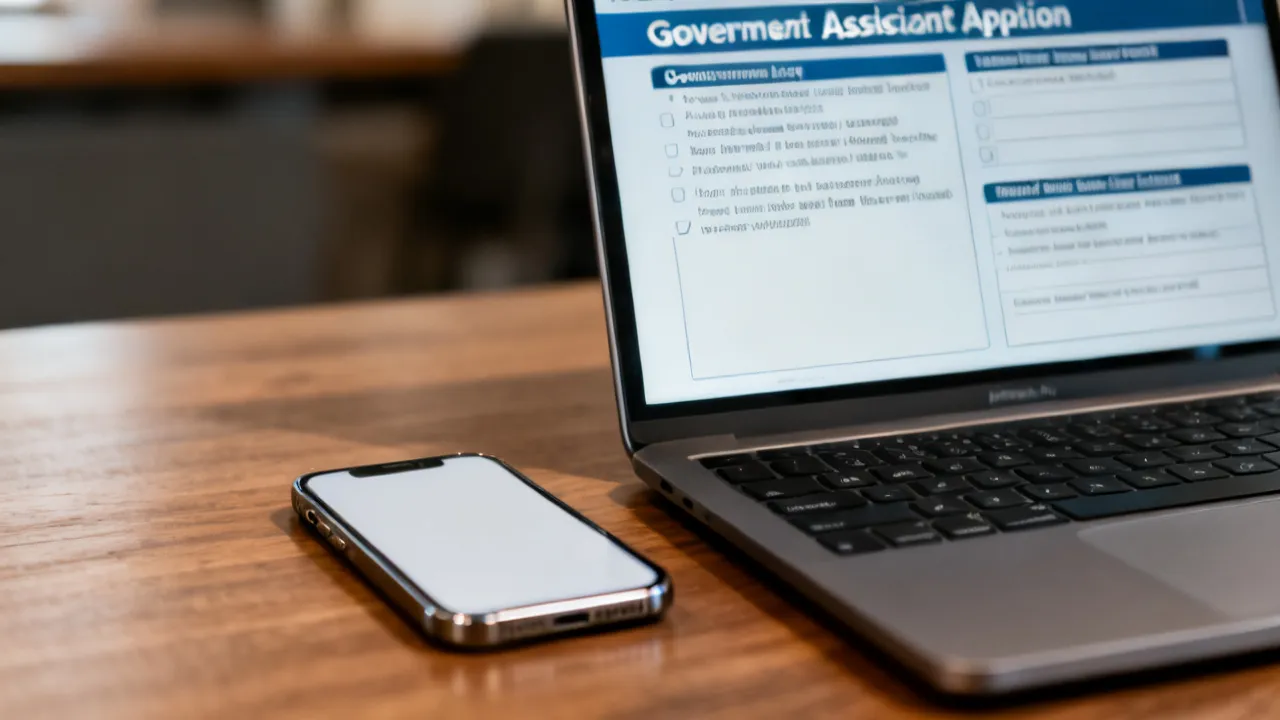
If you’re saying “I Need a New Phone,” the most efficient approach is usually to (1) confirm whether you qualify for government-supported Lifeline/ACP benefits, (2) choose a provider that can supply a device type you can realistically use (battery, updates, network compatibility), and (3) apply with accurate documentation so your household eligibility can be verified quickly. The providers below—SafeLink Wireless, Assurance Wireless, StandUp Wireless, Access Wireless, and True Wireless—commonly offer device options paired with qualifying voice and data service plans. Exact device models, coverage details, and feature limits can vary by plan and state, so it helps to focus less on a single “perfect phone model” and more on getting a compatible device and workable plan for your day-to-day needs.
In other words, when people say they “need a new phone,” they typically need at least one of the following immediately: a reliable way to call and text family, a phone that can support essential apps (authentication, banking, health portals), enough data to handle communication and basic internet needs, or a device with enough battery life and connectivity to avoid frustrating outages. Government-supported programs are built to address that affordability gap, but success often depends on how prepared you are for the application steps and how clearly you understand the service/device constraints that come with discounted plans.
Government-supported smartphone and connectivity programs exist to reduce the “communication gap” for households facing affordability challenges. In the broader phone industry landscape, these programs sit at the intersection of telecom regulation, consumer affordability policy, and nationwide wireless network infrastructure. Practically speaking, they operate through regulated benefit frameworks (commonly called Lifeline) and—where applicable—additional affordability support (commonly called ACP). The intent is consistent: help eligible households afford basic communications and, in many cases, a smartphone experience instead of a basic feature phone.
At the same time, the market reality is that device inventory changes over time. A program that offered a certain model one month might offer a different model the next month because of supplier availability, state-specific contract decisions, or plan configuration updates. Additionally, plan terms may differ by geography. In some areas, coverage is stronger and more consistent; in others, speeds and data performance may feel more variable due to network congestion and signal conditions.
For consumers, that means your top approach should be built around eligibility readiness and service compatibility rather than trying to predict a single specific phone model. If you verify eligibility smoothly, choose a provider whose service works in your area, and select a phone category you can actually use (for example, “modern Android smartphone” if that’s required for your apps), you’ll have the best chance of getting a device that fits your real needs.
When you need a new phone, the provider you choose affects two important things: (1) how easily and quickly you can apply, verify, and receive service, and (2) the specific device options that may be available to you. The section below synthesizes provider-level offerings into a clear comparison of services included and any typical extra package costs. While the programs are designed around regulated benefit criteria, device refresh cycles and plan structures can differ by state, documentation verification status, and current inventory.
It’s also worth recognizing what “extra costs” usually means in this context. Many government-supported plans include baseline voice/text and specific data allotments under the regulated benefit framework. If you want a higher-tier device, additional data, international calling add-ons, or premium features, the provider may offer optional upgrades. Those upgrades can involve added charges depending on what’s offered in your state and what you choose during enrollment.
| Provider (Official Program Page) | Services Typically Included in Government-Supported Plans | Possible Additional Package Costs |
|---|---|---|
| SafeLink Wireless | Unlimited text and calls; data benefits under eligible Lifeline-style service (details vary by plan/state). Offers affordable device or bring-your-own-device (BYOD) options. | Upgrades to premium devices and/or additional data options may require payment. |
| Assurance Wireless | Affordable Android smartphone options; unlimited talk and text; data allowances under eligible government-supported plans. | Optional upgrades such as higher high-speed data or international calling services may carry charges. |
| StandUp Wireless | Affordable smartphone or BYOD options; unlimited talk and text; data plans under eligible support. | Premium phone upgrades or extra data may be available for a fee. |
| Access Wireless | Unlimited voice and text, plus limited high-speed data in coordination with Lifeline/ACP benefits (coverage and limits depend on plan configuration). | Data boosts and device upgrades may be offered for an additional cost. |
| True Wireless | Government-supported phones paired with voice and data service under eligible qualification. | Optional upgrades to better devices or additional data plans may involve charges. |
Sources for the table above: information is summarized from each provider’s official program pages.
source: [www.safelinkwireless.com](www.safelinkwireless.com)
source: [www.assurancewireless.com](www.assurancewireless.com)
source: [standupwireless.com](standupwireless.com)
source: [www.accesswireless.com](www.accesswireless.com)
source: [www.gotruewireless.com](www.gotruewireless.com)
From an industry perspective, the biggest determinant of how smoothly your application proceeds is not the marketing language—it’s the eligibility documentation and household qualification signal. While exact thresholds and program details can be updated over time, the program frameworks referenced by these providers typically align with regulated criteria. When you’re asking “Do I qualify?” your best answer comes from gathering documents that clearly show one of the allowed qualification pathways.
Because these programs are structured as benefit frameworks, you should also expect some degree of verification. Verification commonly includes identity checks and household/eligibility confirmation. If you have recently moved, changed legal name, or updated documentation, it’s often helpful to stabilize those records before applying so that names and addresses match consistently. Small mismatches can lead to delays because verification systems and human review teams rely on document consistency.
Here is a practical checklist of typical eligibility evidence patterns:
In addition to these main categories, you should prepare “supporting clarity” documents even if they aren’t explicitly listed. For example, if your household eligibility depends on a shared address, make sure your identification matches that address (or understand how the provider handles address mismatches). If your phone plan will be used by someone in the household, make sure you follow the household rules in the application—these programs typically require that the benefit is tied to a specific household and that the same benefit is not duplicative.
Below is a consolidated, provider-agnostic guide to what consumers generally need to do—then you apply through the specific provider’s process. Even though each provider has its own enrollment interface, the overall “flow” tends to be similar: eligibility confirmation → application submission → documentation verification → device and service provisioning → setup instructions.
Because many people need the phone quickly, organizing your documents and information ahead of time can reduce friction. You don’t need to memorize everything, but you should be ready to provide the basics accurately.
Start by determining which eligibility path you can substantiate:
If you’re not sure which pathway you qualify under, focus on identifying what documentation you already have. Many applicants find it easier to use “program participation” documents because they are more standardized. Others qualify based on income but may need to locate recent paperwork. Either way, you’re aiming for one clean proof path that the verification system can interpret quickly.
When you “need a new phone,” it’s not just about whether the program offers a smartphone. It’s about whether the phone can perform the tasks you depend on. Here are practical device-fit considerations:
Selection doesn’t have to be complex; it just needs to be realistic. The best decision is often the provider/device combination that matches your coverage needs and app requirements, not the one that advertises the most impressive device on paper.
Very providers use online forms requiring proof of eligibility. Common documentation patterns include:
Tip from an operations standpoint: scan documents clearly, keep file sizes manageable, and ensure names/addresses match exactly across documents. If you have a nickname on one document and a legal name on another, consider whether the application expects legal names. If there is a mismatch, you may need to correct it or provide extra explanation—extra steps that could delay approval.
Also consider how you will upload documents. Make sure your device (the one you’re using now) can take readable photos or scans. Many applicants use a phone camera to capture document images. If the images are blurry or cut off, verification systems may reject them. Re-taking a clearer image can be faster than re-starting an entire application.
Typically, you submit an application online, then follow any provider requests for additional documentation if verification cannot be completed immediately. Some programs may also use an official verification mechanism for enrollment confirmation. If your first attempt is rejected or requires revision, treat it as a “data-quality” issue rather than a final refusal—very corrections are resolvable.
During the monitoring phase, pay attention to messages about:
If you can respond quickly to follow-up requests, your approval timeline improves. Applicants often experience delays not because they don’t qualify, but because the verification process is waiting on one piece of information.
Government-supported phone packages often include baseline device options and service allowances. Optional paid upgrades may exist for premium devices or additional data. So, when you apply, read carefully and verify what is included in the plan you will actually have after approval.
Specifically, you should read about:
In practical terms, many people can benefit from a smartphone that supports essential tasks even if the “premium” data experience is limited. The key is to understand your likely behavior. If you scroll video heavily, tether your laptop via hotspot, or stream frequently, you may hit speed restrictions. If your usage is more about communication, occasional web access, maps, and app authentication, a baseline plan may be enough. Knowing this helps prevent surprises.
While each provider has its own interface and documentation portal, the process commonly looks like this:
It can be helpful to keep a record of what you submitted. For example, note the date you applied and save copies/screenshots (where possible) of your submitted forms and confirmation pages. If you later need to re-submit or correct something, having those details makes the process faster.
When the approval is complete, setup instructions usually include instructions for activating service, connecting to Wi-Fi for updates, and possibly transferring contacts from an old device. Some providers may also provide a brief activation checklist. Following those instructions in the correct order can prevent activation errors.
Not necessarily. Eligibility typically determines whether you can enroll in a government-supported benefit plan, while the specific device model is often subject to available inventory, plan configurations, and state supply. Your top strategy is to confirm the device type category (for example, “Android smartphone availability”) and plan compatibility rather than expecting a specific handset model.
It’s also smart to ask about what features you can reasonably expect from the device category. For example, if you need modern apps that require recent OS versions, you should ask what OS version and update policy is typical for devices in that program. Even if you don’t get a guarantee, the provider may list general device specs that help you gauge suitability.
Some providers offer BYOD (bring-your-own-device) options for customers who can use a compatible device and have it meet technical requirements. Whether BYOD is available depends on the provider’s policy and your device’s network compatibility.
Before pursuing BYOD, consider three practical realities:
If BYOD isn’t supported, the device supplied by the program may still be the simplest path. Many people choose it for time and reliability reasons—especially when the old phone is damaged or can’t reliably connect to updates.
Based on provider program descriptions, typical inclusions include unlimited or broad voice and text service, along with data allowances under eligible plan terms. Data structure may include limited high-speed allowances, and additional data may be available via upgrades or data boosts.
Remember that “data allowances” can be structured differently from one plan to another. Some plans include a certain amount of high-speed data per month, then reduce speeds after that. Others may have different types of thresholds or may allow speed to vary based on network conditions. So when comparing, prioritize the plan’s actual data behavior rather than only the “unlimited data” wording you might see in marketing materials.
Very applicants need documentation to prove household eligibility. This may include evidence of participation in eligible assistance programs (like Medicaid or SNAP) or income documentation that aligns with benefit qualification requirements.
In practice, many applicants are surprised by how strict document readability can be. If you submit an image of a document that is too dark or cut off, it can delay approval even if you qualify. That’s why scanning and clear photos matter. Also consider whether you need to upload multiple pages (for example, income documents sometimes have multiple pages).
Timelines vary depending on verification steps and documentation quality. Submitting clear, consistent information can reduce delays. If the provider requests additional documents, completion time generally depends on how quickly you respond.
Some applicants experience faster results when they provide program participation proof rather than income calculations, because certain enrollments are easier to verify. However, this depends entirely on current verification systems. If your documents are ready and match across forms, you’re already doing most of what matters.
Base government-supported plans generally come with the regulated benefit structure. However, optional upgrades—such as premium devices, additional data, or special calling features—may involve additional charges. Always review the provider’s terms for any optional add-ons.
It can help to ask the provider during enrollment whether any “paid optional” features are default-selected. Sometimes, forms include optional packages that a user can remove. If you’re trying to avoid surprise charges, verify what is included automatically versus what requires a separate choice.
Many providers reference eligibility pathways aligned with Lifeline and, where available, ACP support. Availability and how the combination works can depend on state and policy. You should check the provider’s program terms during application.
Even if you qualify under one pathway, a provider might still require specific documentation for that pathway. Keep that in mind so you don’t accidentally submit documents that don’t match the pathway you want to use for approval.
The very reliable source is the official provider application page and terms displayed during enrollment. Since device inventory and plan details can change, those official pages reflect the very current information for your application.
Also consider that plan limitations can be described in several different ways—sometimes in terms of high-speed data allotments, sometimes in terms of fair use policies, and sometimes in terms of throttling after thresholds. The official enrollment page is usually where you’ll find the most accurate and up-to-date description for your state.
As an industry observer, I recommend evaluating your situation through three lenses: (1) device and usability, (2) service reliability, and (3) application efficiency. This reduces the risk of choosing a plan that technically qualifies but doesn’t function well in your everyday life.
When comparing providers like SafeLink Wireless, Assurance Wireless, StandUp Wireless, Access Wireless, and True Wireless, it’s important to treat them as administrators of benefit distribution rather than as independent “payment markets.” The eligibility frameworks typically reflect federally regulated and/or state-administered criteria tied to income thresholds or participation in government assistance programs. As a result, your application outcome is primarily determined by eligibility verification and data accuracy.
That perspective matters because it shifts your strategy: instead of searching for “the provider most likely to approve,” your strategy should focus on meeting documentation requirements accurately. If you qualify and your documents are clean and readable, you improve the likelihood that any properly submitted application will move forward. If you don’t qualify yet, the most effective next step is to figure out which documents you need and what changes would allow you to qualify under an eligible pathway.
It can also reduce stress to understand that these systems are not meant to be punitive. Verification is designed to prevent duplicate enrollment across households and ensure the benefit goes to eligible participants. If you’re prepared with correct documents and consistent data, the process tends to become more straightforward.
1) The above information comes from online resources, and the data is as of October 2023. 2) This website cannot guarantee that applicants will definitely get a government affordable phone. For specific application requirements and how to obtain it, please refer to the official requirements of the provider. This website will not be updated in real time.
Striking the Perfect Balance: Navigating Premiums and Out-of-Pocket Expenses in Senior Insurance Plans

Explore the Tranquil Bliss of Idyllic Rural Retreats

How to Make Lasting Memories at Disneyland Attractions

4rkojvsx Technology: Industry Insights and Buying Guide

Affordable Phones and Plans for Seniors

Affordable Full Mouth Dental Implants Near You

Unlock the Top Kept Secrets to Finding Your Ideal Dentist for Flawless Dental Implant Results!

Discovering Springdale Estates

Unveiling RS Sul Telecom Services

Affordable Phones and Plans for Seniors
Discover the top deals on new phones and plans tailored for seniors, including discounts on 5G technology and unsold models.
Affordable Cell Phones Without Plans
Discover affordable cell phones for sale without plans, exclusive discounts for seniors, and tailored mobile plan options in your area.

Navigating Government Phone Programs
This guide provides an expert analysis of government-supported phone programs for eligible individuals, offering insights into available providers and their services. Affordable phones are often a necessity for individuals under economic constraints, aiding in communication, job searches, and access to emergency services. The article delves into eligibility criteria, application processes, and compares popular service providers in various regions.
Unlocking the Top Cell Phone Deals
Discover unbeatable cell phone discounts, plans, and offers for seniors and iPhone enthusiasts without contracts.
Navigating Affordable Phone Offers
Discover the essential details about government-assisted phone programs aimed at providing budget-friendly devices to eligible individuals. These programs offer complementary mobile phones and services to qualified beneficiaries, ensuring connectivity at minimal expense. This guide breaks down how to access such benefits and what conditions apply.

How to Apply for a Affordable Phone
This guide provides insights on how to apply for a affordable phone through government-sponsored programs. Understanding how these programs operate and their eligibility requirements is essential. These initiatives aim to support individuals in low-income households or those enrolled in specified government assistance programs by providing basic communication tools.