This guide explains how Payment Processing Systems work, what to evaluate during selection, and how integration decisions affect reliability, cost, and risk. In objective background, payment processing typically links merchants, acquiring banks, gateways, and networks to authorize and settle card and digital transactions while meeting security requirements and regulatory expectations.

Payment Processing Systems are the infrastructure that converts a customer’s payment attempt into an authorized purchase and a final settlement. For merchants, choosing the right approach determines whether payments are approved smoothly, chargebacks are managed effectively, reconciliation is accurate, and sensitive data remains protected across the full transaction lifecycle.
In practical terms, a modern system coordinates multiple parties—typically payment gateways, acquiring banks, card networks, and fraud controls—so that transaction status updates arrive quickly and accounting can match what was sold to what was paid. Even when you “only install a terminal,” the underlying design decisions influence uptime, latency, dispute outcomes, and how consistently your reporting aligns with your bank deposits.
This guide takes an expert, implementation-focused view: what Payment Processing Systems do, how to compare options, which requirements usually drive the decision, and how to validate readiness before you go live.
Very Payment Processing Systems can be described by four connected layers.
1) Customer payment interface
This includes card readers (in-store), checkout forms (online), and mobile payment flows. The interface must capture payment data correctly and support relevant payment methods for your customers.
In-store, the interface is shaped by terminal capabilities, supported card schemes, and connectivity models (online-only vs. store-and-forward behavior). Online, the interface includes how you collect billing/shipping details, how you present authentication challenges, how you handle payment method selection and switching, and how your front-end communicates with your backend. Subtle UI or session-handling mistakes—like losing the customer session during 3D Secure—can cause payment flows to succeed from the customer’s perspective while failing to properly attach to your order records.
2) Payment gateway layer
A gateway routes payment requests to the acquiring bank and relevant networks. Many gateways also handle tokenization and security features that reduce direct exposure of sensitive data.
But a gateway is not merely a “pipe.” The gateway’s operational features often determine how resilient your system is: how it returns authorization results, how it supports idempotent transaction creation, how it conveys error semantics, how it handles partial captures, how it sends asynchronous status updates (webhooks/events), and what retry guarantees you can rely on. A robust gateway implementation includes a clear contract between your application and the gateway, especially around state transitions and duplicate event handling.
3) Acquirer and acquiring bank
The acquirer acts as the merchant’s financial intermediary, submitting authorization requests and later facilitating settlement.
The acquirer’s role becomes especially visible during settlement timing, chargeback processing, and compliance onboarding. Different acquiring relationships and underwriting decisions can influence which card types are accepted, which currencies are supported, how high-risk categories are treated, and how quickly disputes are adjudicated. For merchants, understanding these constraints early is important because a system that performs perfectly technically can still fail operationally if the acquiring relationship cannot support your volume, geography, or risk profile.
4) Card networks and transaction messaging
Networks standardize how authorization and clearing messages are exchanged. This layer also affects how quickly transaction outcomes are returned and how standards-based disputes are processed.
The card networks define expected message formats and processing models. That means your Payment Processing Systems must speak the same “language” as the networks and your acquiring partner. When messaging semantics are mishandled—such as interpreting an authorization response as final settlement, or assuming a particular clearing timestamp—accounting differences become inevitable. Those differences then show up as reconciliation variance, refund delays, and operational confusion when customers request updates.
From an industry perspective, merchants should treat these layers as an integrated system rather than separate vendors. Small mismatches—such as incomplete webhook handling, misaligned currency rules, or inconsistent descriptor settings—often create downstream issues even when authorization rates look healthy.
To compare Payment Processing Systems objectively, focus on measurable and verifiable criteria that affect operations.
Transaction lifecycle support
Confirm the system covers the end-to-end flow: authorization, capture/settlement, refunds, partial refunds, reversals, and status updates. Look for clear documentation of how each event is communicated (e.g., message formats, idempotency behavior, retry strategies).
When expert teams evaluate lifecycle support, they usually go beyond “does it support refunds?” and ask: how are refund states represented? What are the precise meaning and transition rules between “refund requested,” “refund pending,” “refund succeeded,” and “refund failed”? How are reversals represented when a capture never occurs? How does the system behave if a customer requests a refund after a capture has settled but before funds appear in your bank account? Does the provider support partial captures cleanly for split shipments, subscriptions, or usage-based billing?
Lifecycle support also includes how the system handles asynchronous timing. Authorization and settlement are different steps in different processing windows. Your software should be designed to handle events arriving out of order, repeated deliveries, and late-arriving updates without producing duplicates or corrupting ledger state.
Security and compliance alignment
Very payment environments must comply with PCI DSS requirements when cardholder data is involved. Even if your gateway uses tokenization, your overall architecture determines your compliance scope. Seek a design that minimizes your exposure to sensitive data and supports strong authentication and access controls.
Security scope is not a checkbox; it’s a mapping exercise. You need to know exactly which components touch cardholder data, which data elements are stored, what gets logged, and where secrets are stored. For example, debug logs sometimes accidentally capture payment payloads, or internal dashboards sometimes display full card numbers due to misconfigured masking. Strong Payment Processing Systems design includes “secure by default” logging patterns and strict controls on what can be inspected by developers and support staff.
Risk and dispute tooling
Fraud screening, velocity controls, device and identity checks, and chargeback workflow tools can reduce losses. However, the real evaluation is how these tools integrate into your operations—alerts routing, evidence collection, and consistent reason-code handling.
In high-functioning organizations, risk controls are not just rules—they are measurable decision systems. Teams define risk thresholds, set expected approval/conversion tradeoffs, and create an evidence workflow so analysts can justify manual reviews. Disputes are similar: you need a repeatable process for collecting order records, shipment proofs, customer communications, cancellation policies, and refund timestamps. The system’s ability to attach and retrieve relevant evidence quickly has a direct effect on chargeback ratio and dispute win rates.
Reporting and reconciliation
Payment Processing Systems should produce consistent reporting across authorization, capture, settlement, and adjustments. If your accounting period closes daily but settlement is batched, the system must support practical reconciliation methods rather than forcing manual correction.
Reconciliation is where many merchants feel the pain. Approval rates can look good, but if settlement totals do not align with your internal order ledger, finance teams lose time explaining variances. Expert implementations create a reconciliation model in which each payment event maps to ledger entries with consistent reference identifiers. They also define how to treat edge cases: partial captures, failed captures after authorization, duplicates, and reversals.
Scalability and performance
Online merchants especially should evaluate latency under peak demand. Timeouts and retry logic must be tuned so that network fluctuations do not create duplicate charges or “stuck” payment states.
Performance is not only about response time from the customer’s browser. It’s about your backend’s ability to handle webhook/event processing reliably. If the provider sends thousands of events during a daily settlement window, can your event ingestion scale? Are your workers idempotent? Do you have backpressure strategies? Are you able to replay events safely? If you cannot replay, you may be forced into manual interventions during incidents.
Pricing for Payment Processing Systems typically varies by payment method, transaction volume, risk profile, and integration scope. Because pricing structures differ among providers, merchants should request a detailed fee schedule and a transparent statement of how costs apply across scenarios.
Common pricing components include:
Instead of relying on headline rates, evaluate cost using your real transaction mix: average ticket size, proportion of card types, online vs in-store volume, refund frequency, and typical settlement delays.
It also helps to consider your operational costs. A system that requires extensive manual reconciliation, complicated refund coding, or frequent support escalations can cost more than a slightly higher transaction fee. In many organizations, the “true cost” includes the labor hours spent investigating failed webhooks, resolving reconciliation differences, and responding to customer questions about pending charges.
Implementation note: In many deployments, the biggest “hidden cost” comes from integration effort—mapping payment statuses correctly, aligning with your POS/ERP, and ensuring refunds are handled consistently. These tasks can influence both time-to-launch and operational risk.
Integration cost depends heavily on how your existing systems represent order state and how your provider’s system represents payment state. If your order system uses states like “paid,” “payment pending,” and “fulfilled,” but your provider reports “authorized,” “captured,” and “settled,” your team will need mapping rules and perhaps schema changes. The mapping work is not just development—it requires operational alignment and documentation so that everyone knows what each state means.
When Payment Processing Systems integrate with existing systems, the goal is not only payment acceptance but also consistent state management.
POS and offline/online behavior
In-store flows must define how the system behaves during network outages. Some terminals can queue transactions while connectivity is restored. Your integration should define how to reconcile queued authorizations and avoid double capture.
Offline behavior is one of the most overlooked aspects of payment design. If the terminal buffers requests, your backend might receive delayed confirmations, and your POS may update order status optimistically. You need a clear policy: what happens if a queued authorization ultimately fails? Do you void the order? Do you notify staff to re-run the payment? How do you ensure the customer is not charged twice if connectivity returns mid-process? The best implementations treat offline as a first-class scenario during testing, not as a rare exception.
E-commerce checkout orchestration
Online checkouts must manage user experience during authentication challenges, 3D Secure flows, and payment method selection. The payment system needs to support idempotent transaction creation and robust webhook/event handling.
In practice, orchestration includes session management, client-side tokenization, server-side payment creation, and clear handling of asynchronous browser returns. For example, in 3D Secure, the customer may complete authentication in a new frame or redirect, then return to your checkout. Your backend must be able to correlate that outcome to the correct payment attempt, even if the user refreshed the page or resumed from a different device. Idempotency keys and stable correlation identifiers are essential to avoid creating multiple payment intents or capturing twice after browser retries.
ERP/accounting alignment
A frequent operational pain point is mismatched dates: authorization occurs on one day, settlement deposits may arrive later, and refunds can post even later. A strong Payment Processing Systems setup provides clear event timing and standardized references to support reconciliation.
Accounting alignment often requires designing a ledger model that separates operational states (what you did in the store/checkout) from financial states (what the bank processed and when). A well-designed system might record authorization events for reference, capture events as the financial commitment moment, and settlement events as the cash movement point. Refunds and chargebacks should be recorded with explicit linking to original transactions. The linkage is critical for both internal audit and dispute evidence.
Data handling boundaries
You should map where tokenized data resides, who can access it, and what data is transmitted. This is also where security reviews typically uncover gaps—over-permissive service accounts, logging of sensitive fields, or incomplete encryption policies.
Data boundaries are also relevant for privacy compliance. Even if you avoid storing card data, you might still store payment-related metadata such as billing address, email, phone number, or device identifiers used for fraud screening. Those data elements have privacy implications. Expert implementations include data retention policies: what you store, for how long, and how you delete it after disputes or reporting cycles.
Payment Processing Systems reduce risk through layered controls, but responsibility still remains at the merchant level for how the system is deployed.
Tokenization and scope reduction
Tokenization replaces sensitive data with surrogate values. This can reduce your PCI exposure depending on architecture. Still, token management must be treated carefully: tokens should be stored securely, with restricted access and rotation policies where applicable.
Tokenization helps, but it does not mean “no risk.” If token values are exposed in logs or in improperly secured databases, they can still be abused depending on token type and provider architecture. A strong security posture includes masked logging, strict database permissions, and controls around token access. It also includes understanding whether token retrieval is required for refunds and how securely those refunds are initiated.
Transport security and credential hygiene
Use secure transport (TLS), store secrets in a managed secrets vault, and ensure key rotation practices are defined. Webhook endpoints should be verified with signature checks rather than relying on IP allowlists alone.
Credential hygiene is often tested during incident response exercises. Do you know what keys are used by which services? Can you rotate them without downtime? If a webhook signature secret is compromised, can you rapidly revoke and reconfigure endpoints? Your operational plan should include those procedures.
Fraud mitigation with measurable outcomes
Fraud tools should include rules and reporting that help you tune parameters responsibly. The objective is not maximum rejection; it is minimizing losses while maintaining acceptable conversion rates.
A balanced strategy uses multiple layers: pre-authorization checks, velocity controls, authentication and step-up flows, and post-authorization monitoring. The important part is the feedback loop. Teams should regularly review chargeback outcomes and reconcile them to the fraud decisions that preceded the transaction. Without this feedback loop, fraud controls become static and can drift into either overly permissive behavior or excessive friction.
Auditability
Your payment system should preserve traceability: request IDs, transaction references, and event logs that support internal audits and dispute evidence.
Auditability includes more than storing logs. You also need to store “evidence objects” that connect business facts to payment events. For example, a dispute needs order history, shipping proof, refund timeline, and customer communications. If your system cannot quickly retrieve these artifacts or if they are not linked to the same transaction reference used by the provider, you will waste time during disputes—time that directly affects outcomes.
While each organization’s compliance obligations vary, very merchants should validate alignment with established standards and regulatory expectations.
PCI DSS alignment
The PCI Security Standards Council provides guidance on PCI DSS and related requirements. Your implementation should clarify whether you store, process, or transmit cardholder data—and how that affects your compliance scope.
In addition to “are you PCI compliant,” expert teams confirm: what is the PCI scoping boundary? Which servers are in scope? Which environments are in scope (production only or also staging)? Are test systems set up to avoid card data? Are you using tokenized test values? Are you masking card fields in logs and user interfaces? A common mistake is building an integration in staging that resembles production but accidentally allows card data logging or storing due to debug flags.
Operational compliance processes
Even where the gateway handles key security tasks, merchants must implement operational controls: secure access, patch management, vulnerability scanning, and incident response procedures.
Operational compliance includes role-based access controls (RBAC), secure change management, separation of duties, and documented incident handling. For payment systems, incidents can involve unexpected declines, webhook outages, suspicious traffic spikes, or compromise of secrets. Your team should have runbooks for each category and should rehearse them.
Regulatory constraints
Depending on location and business type, additional obligations may apply to consumer protection, data privacy, and strong customer authentication. If you serve cross-border customers, verify requirements for each relevant market.
For example, strong customer authentication requirements can affect checkout flows and conversion rates. Merchants should understand how the payment system supports step-up authentication and how to handle cases where authentication fails or is not completed. The result should be a graceful user experience with clear messaging and accurate payment state mapping.
Source note (background reference): The PCI Security Standards Council publishes PCI DSS materials and updates. For general payment security concepts, refer to the PCI SSC official documentation and, where relevant, the European Banking Authority’s guidance on strong customer authentication and related topics.
A robust Payment Processing Systems deployment treats state transitions as critical. Authorization success does not automatically guarantee capture success, and neither does a customer-facing “success” page guarantee settlement will complete without issues.
Key practices include:
For expert teams, these are often validated via pre-production tests that simulate network failures, duplicate webhooks, partial reversals, and refund edge cases.
But performance and reliability involve more than implementation mechanics. They require an operational model for how your system behaves under degraded conditions:
Consider also the performance of your back-office and reporting systems. Webhooks can arrive faster than your database writes can handle. If the database is a bottleneck, your webhook handler might time out and cause repeated deliveries, which increases load and can lead to cascading failures. A robust architecture includes queueing, scalable workers, idempotent event processors, and monitoring that alerts on event lag.
Refunds and chargebacks can become operational bottlenecks if your Payment Processing Systems setup does not support efficient evidence capture and consistent status handling.
Refund workflow design
Define triggers for refunds (customer request, defective goods, service cancellation) and ensure your system records the transaction reference used for the refund. Support full and partial refunds and align your back-office ledger to the payment events.
A high-quality refund workflow includes: user-facing refund initiation rules, internal approval rules (if necessary), verification of eligibility (e.g., only certain statuses can be refunded), and mapping of refunds to order items and inventory states. For example, partial refunds might be necessary when only part of an order is returned or when a subscription term is prorated. Your system should link each refund to the exact payment capture reference to avoid confusion during bank processing.
Another important aspect is customer communication. Customers often see “pending” charges and “in-progress refunds” that can last days. Your support team needs accurate internal status and expected timelines. If your internal state model conflates authorization with capture, customers may be told inconsistent information, leading to escalations and ultimately chargebacks.
Chargeback readiness
If disputes arise, you need quick access to relevant documentation: order details, shipping confirmations where applicable, customer communication logs, and cancellation policies.
Chargeback readiness benefits from structured evidence capture at the time of order fulfillment. For example, if your system stores shipping carrier tracking numbers and proof-of-delivery events linked to the order ID and payment transaction reference, disputes become manageable. If that evidence is stored separately or manually in spreadsheets, disputes become time-consuming and inconsistent, which reduces win rates.
Reason-code accuracy
Providers often classify disputes by standardized reason codes. Your internal process should map those codes to evidence requirements so that your team responds correctly and promptly.
Reason-code handling should be consistent across channels. If you sell across multiple storefronts or countries, you may have different cancellation terms and evidence types. Your Payment Processing Systems setup should allow you to fetch the appropriate evidence template based on dispute category and market. Expert teams also track dispute outcomes and create feedback loops to improve operations, such as tightening descriptions on invoices, clarifying refund policies, or adjusting fraud review triggers.
Some businesses attempt to build large portions of Payment Processing Systems in-house (custom gateways, bespoke risk scoring, or proprietary checkout). Others prefer provider-managed platforms with prebuilt integration patterns.
From an industry perspective, the “right” choice depends on your capabilities and risk appetite:
Regardless of approach, the very critical factor is integration correctness and secure architecture—not whether the solution is labeled “platform” or “custom.”
To decide realistically, merchants should examine what they truly need to own. Often, ownership should focus on business logic that is differentiating: order state mapping, customer experience orchestration, and reconciliation semantics. Meanwhile, providers can manage stable and sensitive components like network messaging, PCI-relevant tokenization, and certified security operations.
When considering “build,” also consider operational maturity. Payment systems are not only software artifacts; they are continuous services that require monitoring, incident response, and upgrades. Even if you build the integration code, you still depend on the provider’s availability and behavior. If your team cannot provide on-call coverage and incident management for payment flows, partnering can reduce operational risk.
Fraud controls within Payment Processing Systems should be evaluated as a portfolio rather than a single rule.
A practical and defensible risk strategy often includes:
The goal is to reduce losses without damaging conversion. For this reason, you should monitor key indicators such as approval rate, false positive rates, and chargeback ratios—then adjust rules using controlled experiments.
Fraud strategy also depends on payment method. Credit cards, debit cards, and digital wallets can have different fraud patterns. In some cases, adding strong customer authentication step-up can shift fraud to other channels. A robust Payment Processing Systems approach includes channel-aware risk tuning and careful measurement of how changes affect customer conversion and dispute outcomes.
Background reference: For general fraud and payment security principles, industry guidance from payment security organizations and regulator-facing reports can be useful. Use provider documentation and independent risk research where possible.
The table below compares common ways organizations implement Payment Processing Systems and the typical conditions/requirements that influence success. (No links are included, as requested.)
| Approach | What It Typically Provides | Conditions / Requirements |
|---|---|---|
| Hosted checkout / provider-managed payments | Faster integration for online payments, reduced security scope for merchants, prebuilt transaction flows | Clear mapping of success/failure states to your order system; webhook/event integration must be robust; alignment with refund and dispute workflows |
| API-first gateway with tokenization | More customization of checkout and back-end logic; tokenization and flexible payment orchestration | Strong engineering ownership of idempotency, retry logic, and state transitions; secure secret management and webhook signature verification |
| Direct integration with acquiring services (or semi-custom) | Potentially deeper control over certain transaction flows | Higher implementation complexity; greater responsibility for compliance boundaries; operational readiness for edge cases |
| POS-integrated payment solution | In-store payment workflows aligned with terminal/POS capabilities; operational consolidation | POS capabilities must support your payment methods; define offline behavior and settlement reconciliation; staff procedures for refunds and voids |
| Omnichannel orchestration (unified view of orders and payment events) | Consistent handling of payments across channels and currencies; consolidated reporting | Requires clean order/payment identifiers; careful reconciliation strategy for authorization vs settlement; consistent policies for partial captures and refunds |
When evaluating Payment Processing Systems, rely on widely recognized sources:
These sources inform the framework of compliance and security; however, the final requirements depend on your jurisdiction, business model, and processing setup.
Below is a practical, step-by-step guide that expert teams use to reduce risk and avoid common integration failures.
During selection and implementation, align expectations across engineering, finance, operations, and customer support.
Payment Processing Systems are the combined technologies and services that handle payment requests—such as authorization, capture, refunds, settlement, and dispute workflows—between customers, merchants, acquiring banks, and card networks.
A payment gateway is commonly a component within a broader Payment Processing Systems stack. The systems may include gateway routing, acquiring/banking relationships, tokenization, orchestration logic, reporting, refunds, and dispute management.
Prioritize end-to-end transaction lifecycle coverage, reporting accuracy, security architecture fit, reliability under load, refund/dispute workflow maturity, and integration documentation quality.
It can reduce PCI scope depending on your architecture, but it does not automatically eliminate compliance responsibilities. PCI DSS scope depends on whether and how cardholder data is stored, processed, or transmitted by your systems. Validate your specific design with qualified security review.
Common issues include incorrect handling of webhook events, missing idempotency controls leading to duplicate operations, misalignment between order states and payment states, and weak reconciliation mapping between authorization dates and settlement deposits.
Use scenario-based comparisons: apply the provider’s fee schedule to your transaction mix, include refund/dispute costs, and consider onboarding and integration effort. Also measure operational savings from better automation and reporting.
Track authorization success/decline rates, approval-to-capture completion, webhook delivery and processing success, refund success and time-to-complete, reconciliation variance between internal records and settlement, and dispute outcomes.
Yes, many organizations use omnichannel payment orchestration so that in-store and online transactions share consistent reporting and workflows. This requires careful order/payment identifier design and reconciliation rules for authorization vs settlement.
Include success and failure paths for every payment method, refund/partial refund cases, reversal scenarios, webhook signature validation tests, duplicate event handling, network interruption simulations, and reconciliation checks against expected bank/provider reporting.
Review frequency depends on risk exposure and transaction dynamics. In practice, many teams review fraud controls regularly and adjust based on measured outcomes such as chargeback trends, fraud loss rates, and false positive impact on approvals.
Payment Processing Systems are not merely checkout components; they are enterprise-critical systems that connect customer experience, security posture, operational workflows, and financial reconciliation. By evaluating transaction lifecycle coverage, integration correctness, security scope, and dispute readiness—then validating through structured testing—merchants can reduce payment friction and improve resilience in day-to-day operations.
If you are preparing a selection or migration, use the step-by-step guide above as a baseline checklist. The very effective outcomes typically come from rigorous validation, cross-functional alignment, and measurable acceptance criteria rather than vendor promises alone.
Striking the Perfect Balance: Navigating Premiums and Out-of-Pocket Expenses in Senior Insurance Plans

Explore the Tranquil Bliss of Idyllic Rural Retreats

How to Make Lasting Memories at Disneyland Attractions

Affordable Phones and Plans for Seniors

Affordable Full Mouth Dental Implants Near You

Unlock the Top Kept Secrets to Finding Your Ideal Dentist for Flawless Dental Implant Results!

Discovering Springdale Estates

Unveiling RS Sul Telecom Services

The Guide to Car Trading


Delving into Worldline Issuing
In the evolving realm of digital payments, Worldline Issuing stands at the forefront, providing seamless and secure solutions for card issuance and management. As the payments industry transitions towards more efficient and customer-centric practices, Worldline Issuing offers a comprehensive suite of services tailored to the needs of financial institutions and end-users, enhancing both operational efficiency and security.
Understanding Worldline Issuing Solutions
Dive into the realm of Worldline Issuing, a cornerstone in the fintech landscape that facilitates secure and efficient digital payment solutions. Worldline has established itself as a key player by offering sophisticated tools to streamline financial transactions, thereby enhancing consumer convenience and fostering secure monetary operations worldwide through innovative issuing services.
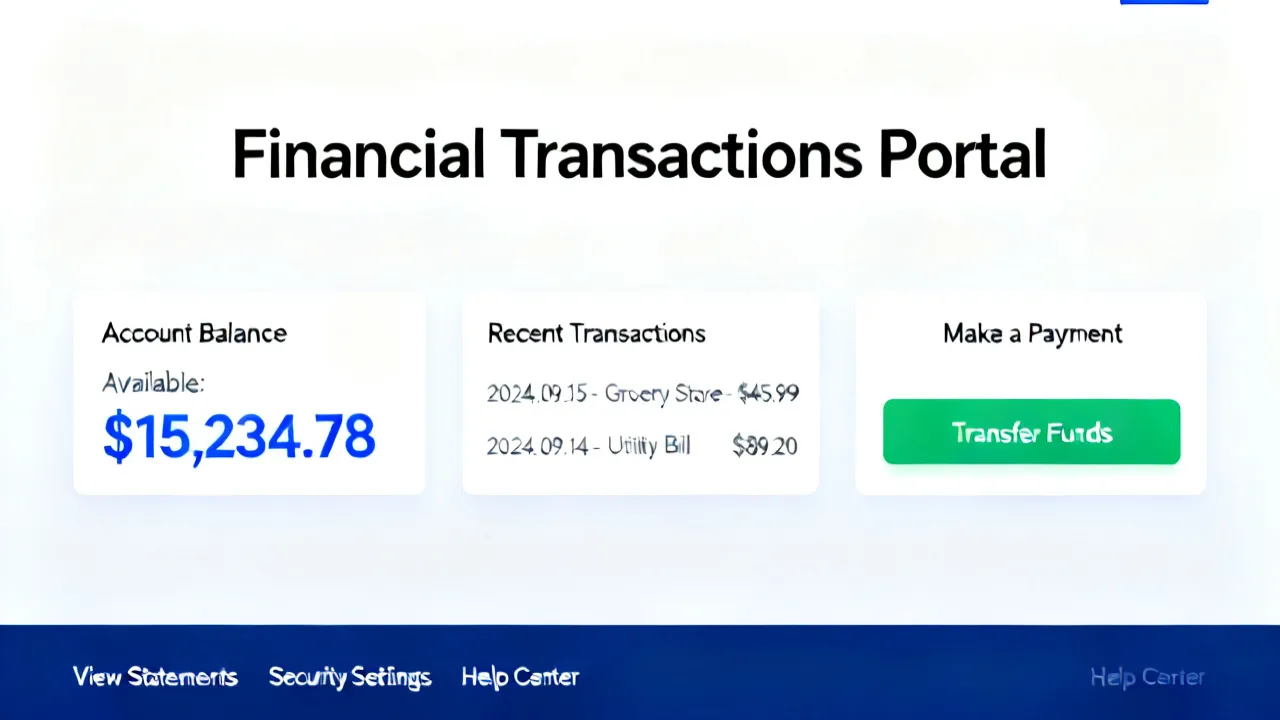
The Comprehensive Guide to Corpay.com
This article delves into the features and benefits of Corpay.com, a key player in the financial transaction space. Known for its innovative solutions, the website offers robust tools for managing financial transactions, making it a valuable resource for businesses and individuals alike seeking efficiency and reliability in managing their financial operations. Explore its offerings to gain a deeper understanding of its industry impact.

Understanding Lifetime Benefits Solutions and How to Choose Wisely
This guide explains how to evaluate Lifetime Benefits Solutions services with a practical, objective lens. It outlines what the keywords typically refer to in benefits planning, why customers compare providers and pricing structures, and how to approach decisions responsibly. You’ll also find a conditions checklist, a comparison table framework, and a set of FAQs to support informed next steps.

Understanding the Impact of 0009968545
This article explores the significance and implications of the keyword '0009968545' within industry and academia. Although '0009968545' might appear as an abstract sequence of numbers to the unaccustomed eye, it potentially represents an International Standard Book Number (ISBN) that could be a crucial reference for numerous academic publications. This analysis examines the potential contexts and influences of this code, offering insights from an expert's perspective.

Digio Livelo: How It Works and What to Compare
Digio Livelo is top understood by comparing how earning, redemption, and service terms align with your goals. This guide explains the background of points-and-rewards ecosystems, typical partner mechanics, and decision factors such as fees, eligibility, transfer rules, and support quality. It’s an objective overview to help you evaluate fit with care.
