Bambora Payfac helps SaaS and platform businesses streamline card payments through a managed acquiring approach, typically with onboarding requirements, KYC/AML controls, and clear settlement workflows. This guide explains what “payfac” means, how fees and processing models are commonly structured, and what to verify during implementation—grounded in objective industry practices and compliance considerations.

Bambora Payfac is designed for businesses—especially SaaS platforms, marketplaces, and other embedded-payments models—that want to reduce operational friction when accepting card payments. Instead of building the full acquiring stack from scratch, a payfac-style approach centralizes responsibilities such as merchant onboarding, program management, and payment routing under a structured framework. For operators, the practical value is straightforward: faster onboarding, more consistent payout/settlement handling, and clearer compliance workflows—provided you meet the program’s conditions and implement integration correctly.
For payment operations teams, the “why” often comes down to a simple operational reality: accepting card payments isn’t only about getting an authorization response. It’s about running an end-to-end lifecycle—merchant onboarding, dispute handling, refund rules, reconciliation, statement interpretation, incident response, monitoring, and ongoing governance. As your platform adds more sub-merchants (or “connected merchants”), those operational tasks multiply quickly. A payfac program can reduce the multiplicative complexity by centralizing key responsibilities, while leaving you responsible for the parts of the workflow that are directly tied to your platform’s data model, your customer experience, and your internal controls.
In other words, Bambora Payfac can matter because it changes where operational ownership sits. It can allow your organization to focus on product experience and platform governance rather than building and maintaining a full merchant acquiring operation. But the trade-off is that you must understand the program rules, integration expectations, and reporting realities—because the program manager’s decisions will shape how your platform must behave during edge cases: chargebacks, partial refunds, reversals, settlement timing gaps, and evidence collection requirements.
When implemented thoughtfully, a Bambora Payfac model supports scalable payment operations, especially for embedded payments. When implemented without sufficient operational alignment, it can create recurring issues that look “payment-related,” but are actually data quality and process problems. Those are solvable—but they require a deliberate plan that includes both engineering and operations teams, not just an API integration sprint.
“Payfac” generally refers to payment facilitator models where a program manager enables sub-merchants (or connected merchants) to accept card payments under the umbrella of the facilitator’s arrangements. In an operational sense, the facilitator manages or standardizes many controls that would otherwise fall on each individual merchant: onboarding checks, certain risk and compliance processes, and structured settlement flows. Exact responsibilities can differ by provider and contract, but the core idea remains the same—centralized program management with defined responsibilities for the facilitator and the client.
When you evaluate Bambora Payfac for your business, you’re usually assessing four connected layers. These layers represent the real operational anatomy of card acceptance in a platform setting. If any one layer is misaligned—especially the reconciliation and dispute layers—you can end up with weeks of firefighting after launch.
Think of these layers as a “systems contract” across stakeholders: your platform, the payfac provider, the card networks, and any acquiring banks involved. Each layer has deliverables and failure modes. Your job is to make sure your platform can handle the failure modes gracefully.
When you evaluate Bambora Payfac for your business, you’re usually assessing four connected layers:
Although those layers sound distinct, the operational reality is that they interact. A webhook payload field might influence reconciliation. Reconciliation might influence refund policy decisions. Refund decisions might affect dispute outcomes. Dispute outcomes might feed back into risk monitoring and future onboarding eligibility. So even though you can structure implementation by layer, you should manage the workflow holistically.
Before signing or building on a payfac program such as Bambora Payfac, treat the following items as gating requirements. They determine whether your go-live timeline stays on track and whether your accounting, risk posture, and customer experience remain stable. The goal of this list isn’t to be pessimistic; it’s to prevent the most common operational surprises that cause late-stage launches and ongoing support burdens.
In practice, many “payment issues” are discovered only after live volume begins: a mismatch between platform identifiers and provider transaction IDs, a refund path that behaves differently than expected, webhook events that arrive out of order, or chargeback evidence that is not available at the time you need it. Verification before go-live is what prevents these issues from becoming structural.
Additionally, you should verify several “operational contract” topics that sometimes get overlooked in technical integration discussions: operational uptime commitments for the webhook service, the support escalation path, the method of communicating incidents, and the turnaround time for onboarding changes. These items often matter as much as the API itself when you’re running payments at scale.
While specific rates and price terms depend on contract and geography, payment programs typically include one or more of the following components. The important part for operational teams is not only the rate, but how fees appear in reporting and statements.
It’s common for teams to “estimate” cost by applying a simple percentage rate to gross volume. That approach can be misleading because refunds, chargebacks, timing differences, and program fees can change the effective cost. For a payfac model, you also want to understand whether your platform is billed directly, how sub-merchant costs are allocated, and whether the program manager passes through certain costs.
Payment programs typically include one or more of the following components:
What to request from Bambora Payfac (or any payfac provider): a fee schedule or pricing exhibit that maps each fee category to a concrete business scenario—e.g., “standard successful purchase,” “failed auth,” “refund,” “chargeback accepted,” and “chargeback under review.” This helps your team avoid reconciliation mismatches that often appear weeks after go-live.
To reduce reconciliation issues, request a sample of settlement/statement outputs with line items for at least one month of representative volume. If a provider can share a sample statement format (even anonymized), your finance team can build mapping rules ahead of time. If you can’t get sample data, ask for a detailed description of how statement fields correspond to transactions and fee components.
Also ask about “fee netting” rules. For example: are fees deducted before you receive payout, or does the statement show gross and then list fee reversals? In payfac models, these details vary widely. The difference matters because your internal ledger needs consistent logic to recognize revenue, expense, and any later adjustments.
In payfac programs, the “supplier” concept isn’t just about the payment processor. It often includes the program manager’s supplier chain—acquirers, payment gateways, compliance tooling, and reporting systems. For Bambora Payfac, you should map responsibilities clearly between:
This division of responsibilities matters because integration failures are rarely only “technical.” A well-integrated payment flow can still fail operationally if your connected merchant lifecycle, evidence collection, or refund policy does not match program requirements. Many disputes are not won simply because the provider can’t access the evidence you promised to collect. Therefore, your platform must treat evidence as a first-class product capability.
To make the responsibilities tangible, you can create a RACI-style matrix (Responsible, Accountable, Consulted, Informed) for each lifecycle stage: onboarding, transaction capture, refund, dispute, and settlement reconciliation. You do not need to share it publicly; internal alignment is what matters. The matrix becomes the operational backbone that engineers and operations follow during incidents.
For example, for a typical chargeback lifecycle:
If you don’t map these roles early, you may find that on the day a dispute arrives you have no clear path: support agents don’t know what they’re supposed to provide, engineers don’t know which webhook event triggers evidence processing, and finance doesn’t know how the dispute will impact settlement adjustments.
Below is a practical, step-by-step implementation approach an industry team would commonly use for payfac-style platforms. The goal is not simply to “connect payments,” but to ensure accounting, risk workflows, and support processes are aligned from day one. For clarity, treat this as an implementation program that spans engineering, finance, operations, and customer support.
To deepen reliability, consider implementing “operational simulation.” That means running rehearsals where your team receives simulated dispute notifications and practices collecting evidence within the required timeframe. Many teams skip this until the first real dispute arrives—then they realize support and operations do not have the data or training to respond quickly.
You can also build “guardrails” inside your platform: for example, preventing a connected merchant from changing critical order fields after a certain point, or preventing refunds that violate program policy. Those guardrails can be enforced at the product layer, not just in operational playbooks. Guardrails reduce the chance that a legitimate dispute becomes impossible to defend because the data needed for evidence was altered or removed.
Payfac arrangements typically require onboarding and ongoing compliance. Requirements vary by program, but these are common categories. Use them as an internal checklist for your organization and—if applicable—your sub-merchants.
Because programs vary and evolve, it is useful to treat the program documentation as a living specification. If you build a solution that only meets today’s listed requirements but cannot adapt to policy updates, you may face friction later. In embedded payments, policy changes can impact rollout timelines for new verticals, promotional pricing, or changes to refund policy.
For Bambora Payfac specifically, always consult the latest program documentation and contractual exhibits for exact wording—because eligibility criteria and operational constraints can evolve over time.
Another practical requirement: you should plan for program audits and evidence requests. Some programs may ask for periodic reports about operational performance, including dispute outcomes and refund rates. If your platform’s data quality and reporting pipeline are weak, audit cycles become long and stressful. Improving data quality early can reduce compliance friction later.
The table below compares typical approaches platforms consider when integrating card payments. It’s intended as a neutral decision aid for evaluating whether Bambora Payfac-style facilitation aligns with your operational model.
| Approach | Top fit | Operational burden | Compliance and onboarding | Implementation complexity |
|---|---|---|---|---|
| Payfac / facilitated program (e.g., Bambora Payfac) | SaaS platforms, marketplaces, embedded payments | Centralized via program manager; you handle your side of workflows | Often standardized onboarding and controlled sub-merchant lifecycle | Moderate; depends on webhook, reporting, and sub-merchant flows |
| Direct acquiring + gateway integration | Merchants with stable volume and lower need for sub-merchant onboarding | Higher: you manage more payment operations | You carry more compliance and merchant lifecycle responsibility | High; more moving parts across acquiring and reporting |
| Hosted checkout only (gateway-led) | Teams prioritizing quick UI/UX integration | Lower for frontend, but backend reconciliation remains your duty | Moderate; may still require merchant/KYC documentation depending on setup | Low to moderate; depends on supported features |
Once payments are live, the very valuable work is measurement. In payfac environments, you’ll want KPIs that cover both customer outcomes and operational health. A common approach is to track:
When you see anomalies, treat them as signals to audit your data flow and operations. Very issues in managed facilitation programs come from mismatched identifiers, incomplete metadata, or delayed evidence collection—not from the payment rail itself.
It can be helpful to define thresholds and automated alerts. For example, if reconciliation match rate drops below a set percentage, an alert should fire for finance and engineering. If refund mismatches exceed a tolerance window, customer support should be notified. If dispute evidence completeness is low, you should trigger a workflow improvement, not just a manual scramble.
Also consider operational KPIs for support responsiveness. For instance:
These KPIs reflect the connection between payment operations and customer experience. Payfac programs can centralize some payment responsibilities, but they cannot centralize your platform’s ability to interpret provider events and support your users.
Even when a payfac program is selected for its operational benefits, embedded payments platforms still encounter predictable pitfalls. Addressing these pitfalls proactively often determines whether payments operations become “set and monitor” or “constantly firefight.”
A very common source of reconciliation pain is inconsistent use of identifiers. Many systems use several IDs: internal order ID, internal payment ID, provider transaction ID, and external reference fields. If the mapping between these IDs is not consistent across purchase, refund, and dispute workflows, reconciliation becomes manual and error-prone.
To avoid this, standardize the “reference key” you embed in every provider request and persist it in your ledger. For example, you might use a stable external reference (like your order number) plus a payment attempt sequence. Then, whenever you receive a webhook, your handler should locate the ledger entry using that reference (or a provider transaction ID that you map at creation time). If you rely on non-stable IDs, out-of-order events can lead to state drift.
Teams often implement webhook handlers that store events, but forget to link those events to business consequences. For example, a webhook might confirm a successful payment, but the platform might not update the customer subscription status or invoice ledger. Or a refund event might be received, but the platform might not verify that it matches an expected refund initiated by the merchant.
Operationally complete webhook processing means you should:
Refunds can be a powerful operational tool, but they also interact with chargebacks. Depending on scheme and program rules, a refund might happen after a dispute is opened or during representment windows. If your platform allows refunds without coordination, you might create evidence inconsistencies or customer confusion.
To reduce conflict, implement clear rules in your platform:
These rules improve reconciliation and also improve dispute outcomes by ensuring the evidence trail is coherent.
Chargebacks often require specific evidence types and formatting. Your internal order records might contain “proof of service,” but if it isn’t presented in a form that matches what the dispute workflow expects, it may be rejected.
To make evidence collection dispute-ready, design evidence pipelines with:
Additionally, ensure that evidence data retention policies don’t conflict with privacy or contractual obligations. Evidence should be retained long enough for dispute timelines, but not longer than necessary under your privacy and compliance policies.
In embedded payments, a platform typically creates or manages multiple connected merchants. If a sub-merchant’s details change (bank account updates, business address changes, refund policy changes, support contact changes), it can affect dispute handling and settlement outcomes. Many teams focus on payment processing for the initial onboarding but fail to build lifecycle governance.
Operationally, you should track connected merchant lifecycle events and ensure they align with what the payfac program requires. For example:
This governance reduces the risk of disputes where evidence ownership is unclear because the connected merchant record is incomplete or outdated.
While payfac programs can centralize certain payment operations, your integration architecture still largely determines whether your platform can scale smoothly. Below are practical areas to consider, from an operational standpoint.
Idempotency is not just a technical best practice—it’s an operational requirement. Payment systems inevitably experience retries, network timeouts, and partial failures. If your platform doesn’t support idempotent processing, duplicate webhooks can cause duplicate ledger entries or duplicate support notifications.
A robust idempotency approach includes:
Webhooks can arrive out of order. For example, a refund webhook might arrive before the system has processed a related original purchase event. Or a dispute status update might arrive while a refund is still pending reconciliation.
To handle eventual consistency:
A common pattern is to store documents in a document store (e.g., PDFs or images), and only later assemble evidence bundles. While that can work, dispute workflows often require structured metadata about which documents belong to which transaction, which timestamps matter, and which line items or services are tied to the disputed charge.
A more reliable approach is to model evidence as structured entities linked to your order/payment ledger. For instance, you can store:
Then, when a dispute arrives, your system can assemble the correct evidence bundle deterministically, reducing human error.
Monitoring should not only detect webhook endpoint errors. It should also detect business-level mismatches. For example:
When you combine technical and business metrics, you catch problems earlier. Technical monitoring might say “webhook endpoint is healthy,” but business monitoring might reveal that webhook processing is failing to update order states due to a logic mismatch or changed event schema.
Disputes are where operational maturity shows. In payfac models, the program manager handles parts of the dispute workflow, but the platform’s evidence stewardship and process speed often determine outcomes.
When a dispute notification arrives, your system should automatically create a dispute case in an internal workflow tool. That case should include:
Having a checklist reduces chaos. Without it, teams often scramble to find documents, guess which evidence is needed, and submit incomplete or incorrect packages.
It’s tempting to treat evidence submission as a manual task for support agents. But in many embedded payments platforms, the dispute evidence spans multiple subsystems: order fulfillment logs, customer communication systems, refunds systems, and merchant admin tools. The more systems involved, the higher the risk of missing evidence.
To control this, implement evidence readiness gates:
This design reduces last-minute collection and improves response timing.
Chargeback outcomes should feed back into your operations. For example, if a certain dispute reason code repeatedly results in lost representments, you should analyze why: was evidence missing, wrong, or late? Did customer notifications fail? Did refund policies contribute to disputes? Did you capture incorrect metadata at transaction time?
In payfac models, you may not control every aspect of the dispute process, but you can control the data you provide and the operational speed of your response workflow.
Customer support interactions are not only about resolving disputes; they can reduce the number of disputes and improve customer outcomes. While chargebacks are initiated by cardholders, your platform’s communication style can influence user satisfaction, cancellation requests, and refund actions.
Practical steps include:
In some cases, a properly handled refund request before a dispute is filed can reduce dispute volume. In other cases, refunds after disputes are opened can increase evidence complexity. Either way, aligning your customer experience with your payment operations reduces operational load.
Embedded payments platforms often face a challenge: even if the payfac provider centralizes some onboarding tasks, your platform still needs robust connected-merchant operations. The payfac provider might require KYC evidence and manage certain compliance steps, but you usually own the business logic for how connected merchants are created, updated, and deactivated inside your platform.
This section expands on what “sub-merchant lifecycle governance” means operationally.
Connected merchant onboarding is more than verifying that a business exists. It typically includes:
For payfac programs, misalignment here can lead to onboarding delays or increased risk flags. Operationally, onboarding delays can be more costly than technical delays because they block revenue generation and product rollout.
Connected merchants evolve. They might change legal names, add product categories, modify billing cadence, or alter support procedures. Your platform needs a change-management process that determines which changes are safe to apply immediately and which require provider review.
To implement change management:
When a connected merchant is deactivated, you must define what happens to payments that were initiated before deactivation. This affects customer experience, refund handling, and dispute processes.
Common operational decisions include:
Without clear rules, teams might be unable to obtain evidence because the connected merchant’s admin accounts were turned off. That results in preventable dispute losses.
Data handling is often treated as a “security box to tick,” but it has operational consequences. The more data your platform must retain for disputes, the more you must align retention policies with privacy requirements and program obligations.
Many payfac and gateway-led models reduce PCI scope through tokenization and controlled handling of sensitive card data. However, PCI scope depends on how your integration is built. If your platform handles raw PAN (card number) or requires the system to process cardholder data directly, your scope can expand.
Operationally, treat PCI scope as an engineering design constraint:
Dispute evidence can include customer-related data. Retention and privacy obligations vary by jurisdiction and by program terms. You should build a retention schedule that meets dispute timelines and regulatory requirements while minimizing unnecessary retention.
Operationally, you should ensure:
In payment operations, audit logs are not only useful for compliance—they help you debug disputes. If a dispute is lost due to missing evidence, you need traceability: who approved evidence, when it was captured, and what version was submitted. Audit logs also help during security investigations and operational incidents.
A payfac program can reduce operational burden, but it does not remove the need for governance. In fact, because responsibilities are split, governance becomes more important. You need clear workflows across teams so that operational decisions are consistent and fast.
Engineering needs governance mechanisms for:
Finance needs governance for:
Risk teams need governance for:
Support governance ensures:
Without support governance, customers experience uncertainty. And uncertainty increases support tickets and can increase dispute probability.
In practice, a Bambora Payfac setup typically follows a payfac-style arrangement where card acceptance and program management are handled in a structured way for platform or sub-merchant models. Your integration focuses on correct transaction initiation, webhook handling, reporting inputs, and dispute-ready data stewardship.
From an operations perspective, “in practice” also includes how you onboard connected merchants into your platform, how you translate provider events into your internal order and ledger states, and how you build evidence and support workflows for disputes and refunds.
Fees are commonly structured around card processing costs and may include program-related fees depending on your contract. The very reliable way to understand “your price” is to review the specific pricing schedule and fee exhibit provided for your onboarding scope, including how refunds, disputes, and settlement timing are reflected.
Operationally, ask for fee reporting examples that show how refunds and dispute outcomes adjust fees. That information affects both customer communications and your reconciliation process.
Payfac-style and gateway-based models often reduce your PCI scope through tokenization and controlled handling of sensitive card data. However, PCI scope is not identical for every integration. You should confirm your PCI responsibilities through the provider’s documentation and your own security assessment.
Even when PCI scope is reduced, you still need strong security controls around tokens, access permissions, logging, and incident response. Payment operations depend on security maturity to prevent token leakage and to maintain auditability.
Typically, the platform/merchant side supplies customer and transaction evidence, while the program manager processes the dispute workflow within the allowed timelines and scheme procedures. You should confirm who submits what evidence in your contract and operational playbook.
In embedded payments, you often own the evidence because it exists in your order fulfillment and customer communication systems. Therefore, build evidence capture into the product flow, not only into a manual dispute workflow.
Common root causes include incomplete webhook handling, missing or inconsistent transaction identifiers, failure to support idempotency for retries, and inadequate metadata collection needed for reconciliation and disputes.
Also watch for event schema changes, missing signature verification, and lack of state transition guards. Those can cause order state drift and reconciliation mismatches even if payment authorizations are successful.
Programs commonly require KYC/AML due diligence, alignment with acceptable business models, clear refund/customer support practices, and security practices for handling payment-related data and tokens. Exact requirements depend on the program and your transaction profile.
For platforms that onboard multiple connected merchants, programs may also require you to demonstrate operational readiness at scale: how you ensure merchant compliance, how you monitor dispute outcomes, and how you respond when merchants change their operations.
Many payfac programs are designed for sub-merchant or connected-merchant workflows, but eligibility, onboarding requirements, and permitted verticals vary. You should confirm how the program defines “connected” entities, what onboarding evidence is required, and how lifecycle updates must be reported.
Operationally, you should also confirm what happens to disputes, refunds, and evidence access when a connected merchant is deactivated or restricted.
Payment facilitator and onboarding models operate within frameworks shaped by card network rules and regulatory expectations. For compliance-oriented readers, two widely referenced sources of guidance are:
Because regulatory and program rules evolve, always treat these as background references and rely on the latest program documentation and legal counsel for decisions specific to your operation.
In addition to broad compliance references, you should align with the practical risk expectations embedded in payment program guidelines: dispute ratios, refund patterns, prohibited product categories, and operational responsiveness. Payment programs often incorporate risk models that consider not only your direct behavior, but also the behavior of your connected merchants—especially in embedded payments.
Bambora Payfac can be a strong fit for SaaS and platform operators seeking a managed path to card acceptance—particularly when you need standardized program operations for connected merchants and want to reduce the operational burden of running payment acquiring functions end to end. The success of such a setup depends less on marketing promises and more on disciplined implementation: clear fee understanding, robust webhook handling, dispute-ready data processes, and continuous reconciliation practices.
If you approach Bambora Payfac as an operational program—not just an API connection—you increase the likelihood that your integration scales smoothly as volumes, merchants, and customer expectations grow. The best implementations treat payments as a lifecycle system: onboarding, transaction processing, refund control, dispute evidence stewardship, settlement reconciliation, monitoring, and governance across the teams that make those systems work day after day.
Ultimately, the operational value of a payfac program emerges when engineering and operations collaborate on the details that matter: how identifiers map, how refunds are authorized and reported, how evidence is captured and retained, how webhook events are processed reliably, and how finance reconciles statements consistently. When those details are handled with care, Bambora Payfac-style facilitation can become a stable foundation for scalable embedded payments.
Striking the Perfect Balance: Navigating Premiums and Out-of-Pocket Expenses in Senior Insurance Plans

Explore the Tranquil Bliss of Idyllic Rural Retreats

How to Make Lasting Memories at Disneyland Attractions

Affordable Phones and Plans for Seniors

Affordable Full Mouth Dental Implants Near You

Unlock the Top Kept Secrets to Finding Your Ideal Dentist for Flawless Dental Implant Results!

Discovering Springdale Estates

Unveiling RS Sul Telecom Services

The Guide to Car Trading


PayPal Unbanked: A Practical Guide for Digital Payments
This guide explains how PayPal Unbanked works for people who may not have a traditional bank account. It provides objective background on the “unbanked” concept and digital payment rails, then breaks down eligibility, setup considerations, and risk controls, so you can make informed choices about account access and everyday purchasing.

Paypal Unbanked: Digital Payments for People Without Banks
Paypal Unbanked options help people manage everyday payments when traditional bank access is limited. This guide explains how “unbanked-friendly” payment flows generally work, what to verify before choosing a provider, and which compliance steps matter. Background covers digital wallet basics, account funding methods, and practical risk controls.

Calcard Sinop: Expert Guide to Use and Sourcing
Calcard Sinop is a medicine-brand reference commonly discussed by people seeking clarity on active ingredients, safe use, and sourcing. This guide explains what “Calcard Sinop” typically relates to in pharmacy practice, how to compare suppliers responsibly, and what conditions matter before purchase or use—grounded in general, objective medicine-safety principles and regulatory expectations.

Understanding Joao Clemente Souza Itau Via Pix Code
This guide explains what the identifier “Joao.clemente.de.souza..itau.via.pix.294.629.912.00” typically signals in a payment context, and how to validate it safely. Objectively, the “Pix” ecosystem in Brazil enables fast transfers, but identifiers and merchant references must be checked carefully to prevent misattribution. You’ll also find practical conditions, a comparison table, and FAQs for responsible handling.

Lifetime Benefits Solutions: Expert Guide for Informed Choices
This guide explains how lifetime benefits strategy and good planning can support individuals and families. It provides objective context on what “lifetime benefits” typically means, how consumers evaluate providers, what risk factors to consider, and why due diligence matters. The discussion includes practical decision criteria around Www.lifetimebenefitsolutions.com and what to verify before selecting a supplier.
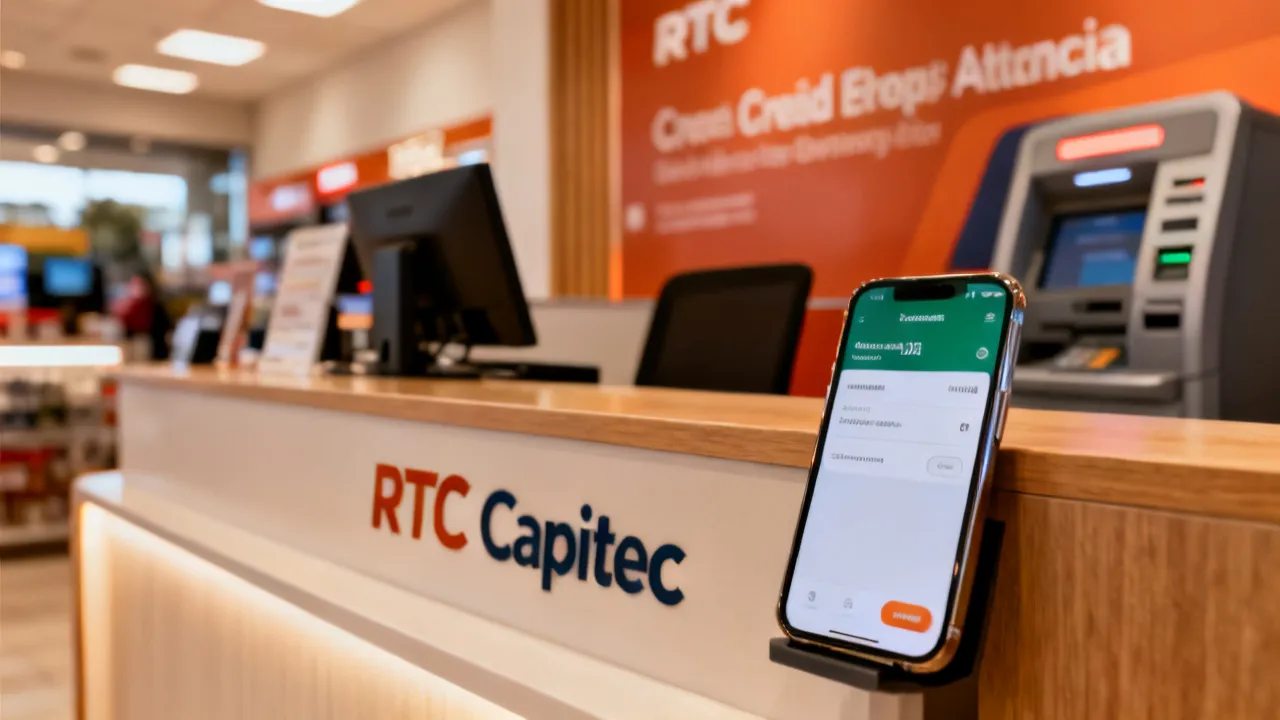
Rtc Capitec Guide for Modern Retail Clients
This guide explains how “Rtc Capitec” is typically approached in retail client experiences, focusing on practical, compliant service considerations and operational readiness. Rtc capitec is discussed as a service concept rather than a marketing promise, covering how institutions manage transactions, documentation, and customer verification processes in everyday banking contexts, with industry-aligned expectations.
