Payment Processing Systems shape how businesses accept, authorize, and settle customer payments across POS and online channels. This guide explains the core components, risk controls, and integration choices in an objective way. It also outlines evaluation conditions and a practical step-by-step approach to help you select providers, reduce operational friction, and strengthen security and compliance.
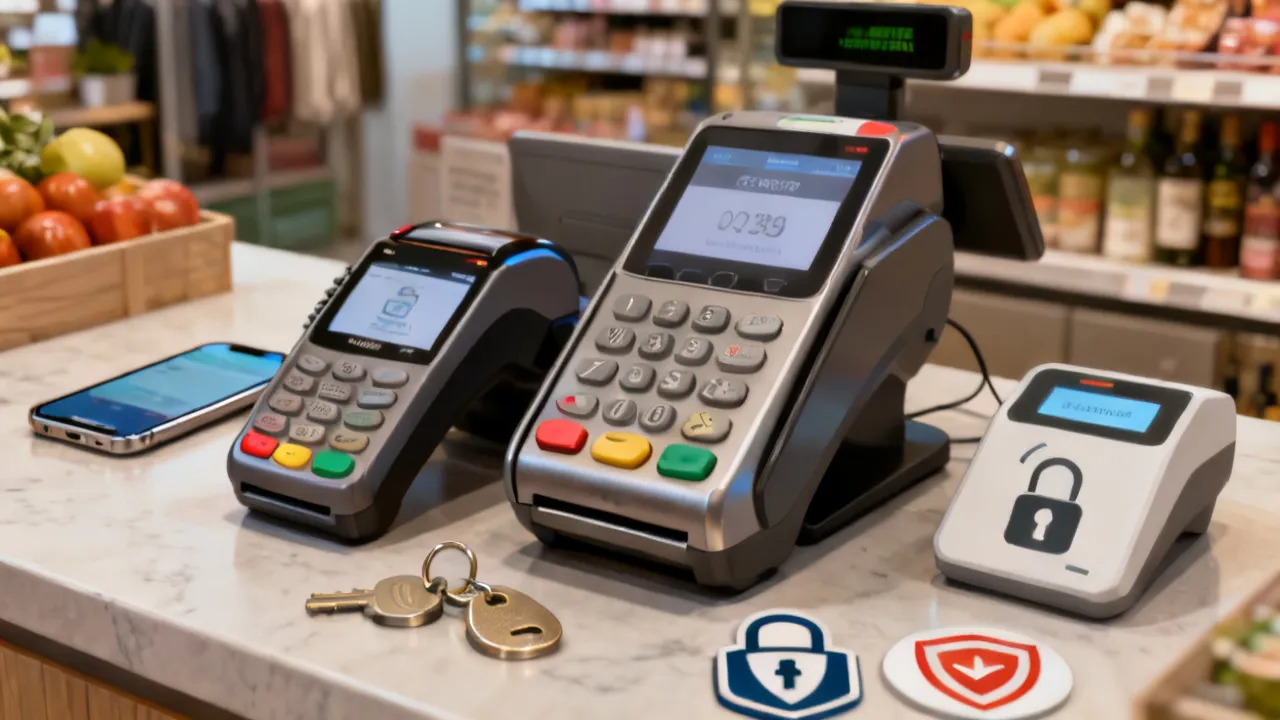
Payment Processing Systems are the backbone of how merchants accept card and digital payments, manage authorization and settlement, and route transactions through payment gateways, processors, and acquiring banks. In practice, strong systems reduce failed payments, improve reconciliation, and help maintain compliance—especially when you expand from in-store terminals to e-commerce, mobile checkout, or omnichannel workflows.
From an industry perspective, the “top” payment processing setup is rarely a single product. Instead, it’s an architecture: payment acceptance channels (POS, online checkout), orchestration rules (routing, retries, capture/void logic), security controls (tokenization, encryption, access governance), and operational tooling (webhooks, reporting, chargeback workflows). This guide breaks down what to evaluate and how to approach the decision objectively, without assuming one vendor fits every business model.
To make this practical, the sections below expand the evaluation approach from “what features exist” to “how the system behaves,” because in payments it’s the edge cases—timeouts, partial shipments, retries, reversal delays, webhook outages—that determine whether your team spends its time on growth or firefighting.
When customers press “Pay,” the transaction’s journey can involve multiple parties: an issuer, a network, an acquirer, a processor, and often a gateway or platform. Each hop can add latency, introduce edge-case failures, or affect reporting accuracy. Payment processing systems help coordinate these steps so merchants can reliably capture funds, handle edge cases (partial refunds, reversed authorizations), and keep accounting records consistent.
For operational teams, the impact of payment processing systems isn’t only about customer-facing outcomes. It also includes internal workflows: order management synchronization, refund approvals, accounting exports, fraud review operations, and dispute evidence gathering. In many businesses, payment processing is where these functions intersect.
In other words, payment processing systems are not just technical plumbing. They function like a control plane for money movement. A strong control plane makes outcomes predictable even when external services behave imperfectly.
Very payment processing systems can be understood through a few core layers. Understanding these layers helps decision-makers ask the right questions during vendor evaluation. When you break the architecture down this way, it becomes easier to identify responsibility boundaries and avoid “integration gaps” where two parties assume the other one handled something.
Below is a layered view that you can use during discovery calls, RFP responses, and technical design reviews.
This is where transactions begin. Common acceptance methods include:
Acceptance is not only a user interface issue. It also influences authorization behavior and the data you can provide to improve approvals and reduce fraud. For example, card-present payments typically have different liability rules and evidence than card-not-present transactions. Similarly, a subscription checkout needs a different lifecycle than a single purchase.
When you evaluate acceptance, ask:
Gateways translate merchant payment requests into standardized messages and manage key flows such as:
The orchestration layer is where many payment reliability issues originate. Consider the real-world behavior: clients time out, network requests fail mid-flight, and webhooks arrive after your application has already moved on. A well-designed orchestration layer ensures you can recover and reconcile without losing money or double-charging.
When vendors describe their system, you should look for operational guarantees such as:
Processing coordinates the movement of transaction data with acquiring partners. The acquiring relationship can affect settlement timelines, fee structures, and dispute handling workflows.
Even when a gateway abstracts technical details away, processing and acquiring characteristics often show up indirectly as:
Therefore, in evaluation discussions, you should ask what “infrastructure choices” exist behind the abstraction. While you may not be able to change them, you need visibility into how they affect your operational outcomes.
Well-designed payment processing systems aim for secure handling of sensitive data. Industry-standard practices typically include encryption in transit and at rest, tokenization, and strict role-based access to payment environments.
Security in payments is both about preventing breaches and preventing accidental exposure through logging, misconfiguration, or overly broad access. Many teams have the “big” controls (encryption and tokenization) but still face risk if they log sensitive data or grant too many people access to dashboards and API keys.
When evaluating security and data handling, look for:
In mature systems, security is integrated into the product workflows, not added as an afterthought. That integration becomes crucial during incident investigations and compliance audits.
Transactions must be trackable end-to-end. Look for features such as:
Operationally, teams often struggle not because they “can’t access data,” but because the data doesn’t match how finance teams think. Good systems align event identifiers, monetary amounts, timestamps, and lifecycle states so that finance and engineering speak the same language.
In particular, dispute management is an area where operational readiness matters. A system should not only provide dispute status updates, but also help you organize evidence quickly enough to meet deadlines.
Merchants typically evaluate payment processing systems through cost, compatibility, and operational fit. However, the very important selection criteria are often about control and predictability: how the system behaves under failure, how it supports compliance, and how quickly and accurately it provides reconciliation data.
A helpful way to think about evaluation is to treat the system as a distributed workflow engine. Your merchant application interacts with the payment system through APIs and webhooks; the payment system interacts with banks, issuers, and networks; and the merchant must maintain a consistent record. The more “recoverable” and “self-describing” the system is, the less operational drag you will experience.
Different businesses experience different payment behavior. A retailer with frequent card-present transactions needs stable terminal workflows and fast settlement mapping, while an online subscription service prioritizes secure recurring billing, dunning logic, and accurate lifecycle status updates.
Before you compare vendors, document a few “must-win scenarios” that reflect your business reality. Examples:
These scenarios become your evaluation lens and later become test cases for sandbox testing.
From an integration standpoint, the “hard part” is not the happy path. Ask how the system responds to:
Good systems provide consistent identifiers, idempotency support, and clear reconciliation fields. These features reduce operational surprises and prevent revenue leakage.
Reliability also includes how the system communicates. Ask for:
Compliance requirements vary by jurisdiction and processing model, but a common baseline is adherence to PCI DSS concepts—especially around reducing merchant exposure to cardholder data. Instead of storing sensitive card data, modern systems often use tokenization so merchants can operate with non-sensitive tokens.
For authoritative guidance on payment security and PCI expectations, consult the Payment Card Industry Security Standards Council materials: PCI DSS and related guidance on safe storage, processing, and transmission. (Source: PCI Security Standards Council)
Because compliance is often a joint effort between merchant and provider, it’s important to ask how responsibilities are shared. Some questions to ask include:
Another area that often surprises teams is how they manage secrets. Payment systems typically require API keys. The safest implementations treat API keys like production credentials: rotate regularly, restrict access, and log usage. A provider that offers strong key management guidance and tooling reduces risk.
Operational maturity is often revealed by reporting quality. Look for settlement reports that map to:
When reconciliation is ambiguous, finance teams spend time manually matching transactions—an avoidable cost.
To evaluate reporting, request sample settlement files and reconciliation exports aligned to your order/payment model. Then test whether the exported identifiers can be used to update order statuses automatically. A high-quality system reduces reliance on spreadsheets and manual mapping rules.
Also consider the “operational reporting latency.” For example, if the system only provides certain status updates after a long delay, your customer service team may see outdated payment statuses and respond incorrectly.
Even when two providers offer similar features, implementation details can materially change outcomes. Consider integration style, event handling, and operational readiness.
A recurring theme in payment implementations is “workflow design.” Your application should implement a state machine that reflects payment lifecycle stages. Vendors provide raw events; your system turns them into business logic: order fulfillment triggers, refund confirmations, customer notifications, and accounting exports.
Hosted checkout is often easier to implement quickly, but embedded checkout can be essential when your brand requires full UI control or when you need advanced flow customization. Your evaluation should include not only the UI choice, but also the operational differences:
Professionals treat payment state as a workflow, not a single request. Your system should store the transaction’s lifecycle (created → authorized → captured/settled → refunded/disputed) and handle asynchronous updates via webhooks.
Idempotency matters because payments occur over networks that fail. Even if your product engineers never plan to send duplicate requests, real systems do: user double-clicks, mobile networks drop packets, retries are triggered by infrastructure timeouts, and integration jobs re-run.
For a reliable system, ensure:
A strong pattern is to treat the payment provider as the source of truth for payment status while your application maintains a “mirror” state that is updated based on provider events and reconciled via periodic status queries when needed.
Webhook delivery should be resilient. Reliable payment processing systems typically include:
In addition, your engineering team should implement a webhook receiver that is fault tolerant. That includes:
Finally, evaluate API coverage. If webhooks are delayed or fail, you need a safe way to query transaction status. Providers that offer reliable status retrieval by ID reduce recovery complexity.
Disputes are not hypothetical in real operations. Evaluate whether your payment processing systems provide:
Building chargeback readiness early reduces the scramble once disputes arise.
Chargebacks also have operational deadlines that require process discipline. Consider that a dispute might require evidence that your company stores in a different system (e.g., shipping logs in one tool, customer communication in another). Your payment system evaluation should include how easily you can connect these sources.
Ask providers whether evidence deadlines are displayed clearly, whether there are notifications for impending deadlines, and whether the system helps you interpret dispute reason codes so you know what evidence typically wins for that category.
Security is not a one-time checklist; it’s an operating discipline. While you should follow your organization’s security policies and consult professional advisors as needed, the following practices are commonly recommended across mature payment programs.
For the authoritative security baseline, refer to PCI DSS documentation from the PCI Security Standards Council. (Source: PCI Security Standards Council)
In practice, most breaches in payment contexts involve some combination of misconfiguration and human error. Security top practices are designed to reduce that risk by making unsafe actions harder and by enabling faster detection and response if something goes wrong.
Security also needs to be validated during testing. For example, verify that your application does not accidentally log payment data in error messages, that support staff portals don’t expose sensitive details, and that debugging tools in development environments don’t carry over into production with weak logging policies.
Pricing models for Payment Processing Systems vary widely. Some vendors charge per-transaction fees, while others combine subscription, gateway, and processing components. Because pricing is structured differently across providers, the safest approach is to evaluate costs based on your actual transaction mix (authorization rate, refund rate, channel mix, and dispute frequency).
Important: This article does not provide specific “price per transaction” numbers because pricing is highly sensitive to contract terms, volumes, industries, and regional processing. Instead, the objective approach is to request a written pricing schedule from shortlisted suppliers and model it using your last 3–6 months of transaction data.
Also clarify where fees may apply, such as:
To avoid surprises, require a pricing exhibit that specifies how fees are computed for each event type: successful authorization, failed authorization, captured transactions, refunded transactions, and chargebacks (including any per-dispute fees). Many cost misunderstandings come from vendors charging for actions the merchant didn’t anticipate.
When you model costs, include operational costs too. For example, a system that requires manual reconciliation may save on per-transaction fees but increase staff time. A system that provides rich identifiers and automated exports may cost more but reduce total cost of ownership.
“Supplier” in payment contexts can mean the processor, the gateway/platform, or the acquiring partner. Some merchants contract with one entity that orchestrates everything, while others use separate components. Either way, a disciplined evaluation prevents mismatched responsibilities.
When comparing suppliers, focus on accountability:
Request implementation timelines, sample event payloads, and reconciliation samples. Providers that can demonstrate working examples typically have mature operational processes.
For objective comparison, ask each supplier to answer the same set of technical and operational questions, then score responses consistently. Example criteria include:
Also consider how vendor changes might affect you. Ask what happens if the provider changes event schemas, routing logic, or supported payment methods. A provider that uses versioning correctly and communicates deprecations reduces long-term integration risk.
The following section is designed to help you structure evaluation criteria and implementation planning for Payment Processing Systems. It is provided as an objective comparison framework rather than a vendor ranking.
| Evaluation area | What to look for in Payment Processing Systems | Typical requirements / conditions | Source to consult |
|---|---|---|---|
| Security & data handling | Tokenization, encryption, secure API access, minimal cardholder data exposure | Vendor should describe token model; merchant should enforce least-privilege and secure key storage | PCI Security Standards Council guidance on PCI DSS and payment security concepts |
| Integration model | Hosted vs. embedded checkout options; clear API/webhook documentation | Your engineering team must be able to implement idempotency and handle asynchronous state updates | Vendor API documentation and PCI-related guidance on secure payment flows |
| Reliability under failure | Idempotent operations, webhook retry policies, consistent transaction identifiers | Merchant should maintain a payment state machine and reconciliation identifiers | Industry integration top practices from payment platform documentation and security councils |
| Reporting & reconciliation | Settlement reports mapped to authorization/capture/refund IDs; consistent fee reporting | Finance and accounting must be able to reconcile against internal order/payment records | Vendor reconciliation documentation; generally aligned with settlement cycles described by acquirers |
| Dispute / chargeback workflow | Evidence collection, dispute status updates, and clear deadlines | Merchant should define evidence rules and escalation process before launch | Network/acquirer dispute guidance and provider dispute workflow documentation |
| Pricing & commercial terms | Transparent fee components, refunds/disputes cost handling, and contract clarity | Merchant should model costs using real transaction history and confirm contract terms in writing | Contract pricing exhibits and payment processing agreements supplied by vendors |
As you compare suppliers, use the table not only as a checklist but as a way to prompt deeper answers. When a vendor gives high-level statements like “we support tokenization,” follow up with questions: “What does the token represent?”, “How is it protected?”, and “What limitations apply to recurring billing and refunds?”
Below is a practical sequence you can adapt for very merchant environments—whether you run POS, e-commerce, or both.
In real implementations, the success criteria often include “time to reconcile” and “time to resolve payment incidents,” not just authorization rate. Those operational metrics are often what determine whether the system scales smoothly after launch.
Switching Payment Processing Systems can introduce migration risks. Confirm the following conditions during due diligence:
Migration is not only technical. It is also operational governance: your finance team needs to know which settlements correspond to which provider during the overlap period, and your customer support team needs to know which payment statuses map to which provider identifiers.
If possible, plan a cutover window with reduced promotional activity and sufficient engineering coverage. For many businesses, the safest cutover is one where both providers can coexist without impacting customers.
A payment gateway typically manages the secure transmission of payment details and orchestrates the checkout/authentication flow, while a payment processor handles the transaction processing with acquiring and settlement infrastructure. Some providers offer both capabilities in a single platform, but responsibilities can differ by contract and architecture.
They can, depending on how they handle routing, retries, fraud scoring, and authorization settings. However, approval outcomes also depend on issuer behavior, customer bank policies, and risk signals. Any claimed lift should be validated using your transaction history and tested during a pilot.
When a vendor claims approval improvements, ask for evidence methodology: what was tested, what variables were held constant, and what segments improved (new customers vs. returning, specific geographies, specific payment methods). Approval rate improvements that apply only to a narrow segment may not solve your overall problem.
Many systems use tokenization so your systems store tokens rather than card numbers. Tokens allow recurring billing or payment re-use without exposing cardholder data to your application. Security design should also minimize logging of sensitive fields and enforce access controls.
At minimum, test idempotency and duplicate request handling, webhook delivery and verification, refund/reversal timing, and partial capture flows if your fulfillment logic requires them. Also validate reconciliation mapping for at least one full settlement cycle.
Additionally, test operational edge cases:
Extremely. Webhooks commonly inform your system of authorization results, capture completion, refunds, and dispute updates. If webhook verification and retry handling are implemented correctly, your system can remain consistent even during temporary outages.
Webhook reliability also affects compliance and customer experience. For example, if you notify customers that their payment is captured before it truly is, that can lead to customer support and refund complexity later.
Yes. Even if your initial dispute volume is low, you should prepare evidence workflows, internal owners for response deadlines, and a process for reviewing outcomes. Preparedness reduces the operational burden when a dispute occurs.
Request a written fee schedule and model it with your real transaction mix: channel distribution, typical ticket sizes, refund frequency, and chargeback/dispute handling assumptions. Evaluate both variable and fixed fees, and ask how fees apply to reversals and partial settlements.
Also compare non-fee factors that affect cost. For instance, better reconciliation exports reduce accounting labor. Better dispute evidence tooling reduces the time your operations team spends per dispute.
Use PCI Security Standards Council resources for PCI DSS concepts and expectations. Additionally, follow regional regulatory guidance relevant to your payment flows and data handling. Your legal and compliance teams should validate how these requirements apply to your specific architecture.
It’s also useful to ask the provider about their compliance posture: whether they have formal attestations, how they support audit requests, and what documentation they provide to merchants.
Payment Processing Systems are more than a way to take cards—they’re a set of interconnected capabilities that determine how payments behave under real-world conditions: failures, refunds, reconciliation cycles, and disputes. An expert approach focuses on system architecture, security practices, integration reliability, and operational accountability. By using a structured evaluation framework and a step-by-step implementation plan, merchants can reduce operational friction and support secure, dependable payment experiences across channels.
When you treat payment processing as an end-to-end workflow—spanning acceptance, orchestration, processing, security, and operations—you gain the ability to scale while maintaining accuracy and control. That balance of reliability, security, and integration is what ultimately turns “payments” from a risk area into a trustworthy foundation for growth.
Striking the Perfect Balance: Navigating Premiums and Out-of-Pocket Expenses in Senior Insurance Plans

Explore the Tranquil Bliss of Idyllic Rural Retreats

How to Make Lasting Memories at Disneyland Attractions

Affordable Phones and Plans for Seniors

Affordable Full Mouth Dental Implants Near You

Unlock the Top Kept Secrets to Finding Your Ideal Dentist for Flawless Dental Implant Results!

Discovering Springdale Estates

Unveiling RS Sul Telecom Services

The Guide to Car Trading


Understanding the Concept of Ibiaeon
Dive into the groundbreaking concept of Ibiaeon, a theoretical model that combines technological advancements with philosophical perspectives. Ibiaeon represents a unique intersection where innovation meets ethical considerations, aiming to offer sustainable solutions for future societal challenges. This guide presents a deep analysis of the possibilities and implications associated with Ibiaeon.
Understanding the Sage Cte Platform
Sage Cte is a powerful software offering comprehensive solutions for businesses across various industries. This article delves into its capabilities, exploring its integration with different systems, cost implications, and the significance of choosing the right supplier. By understanding Sage Cte, businesses can make informed decisions for optimal operational efficiency and competitive advantage.
An In-Depth Look at Salesforce
Salesforce is a transformative cloud-based customer relationship management (CRM) platform that empowers businesses to streamline their sales, service, and marketing efforts. Known for its robust suite of tools and global reach, Salesforce has become an industry standard in CRM solutions, providing businesses with unparalleled insights and automation capabilities essential for growth and customer retention.
Seamless Integration of Sagepay and Salesforce
This guide highlights the integration of Sagepay with Salesforce, emphasizing the importance of harmonizing payment processing with customer relationship management. Sagepay offers secure online payment solutions, while Salesforce provides comprehensive CRM services, both popular among businesses seeking efficiency. Explore how they complement each other for enhanced business functionality.

Plansource BambooHR: Expert HR Platform Comparison Guide
Plansource BambooHR helps organizations standardize HR workflows with modern recruiting, onboarding, and people analytics. This guide explains what the keywords typically refer to in HR technology contexts, outlines how businesses evaluate these platforms, and provides an expert comparison framework so HR leaders can make informed sourcing decisions based on requirements, implementation scope, and total cost considerations.
Integrating Sagepay with Salesforce
Integrating Sagepay with Salesforce streamlines business operations by combining sophisticated CRM capabilities with a secure payment gateway. This fusion allows businesses to efficiently manage customer relations and transactions within one seamless framework. Sagepay ensures secure and swift payments, while Salesforce aids in comprehensive customer relationship management, enhancing overall operational productivity and customer satisfaction.
